Water damage almost always starts small. A pipe joint loosens, a roof shingle lifts, a drain slows down over months, and then one day the damage shows up as a soaked ceiling or a flooded basement. I’ve walked into hundreds of properties where the owner had no idea the problem had been building for weeks.
Property owners lose real money and time when they don’t recognize these sources early. A slow leak behind a wall can rot framing for months before anyone notices the smell. Storm water sitting under a foundation does its worst work when nobody’s watching.
I cover the plumbing and appliance failures that start inside your walls, the building envelope problems that let water in from outside, severe weather events that overwhelm a property fast, drainage and sewer issues that back water up where it doesn’t belong, and the everyday human habits that quietly cause most preventable damage.
Plumbing Failures: Burst Pipes, Leaks & Supply Line Breaks
Plumbing failure is the single most common cause of water damage in residential and commercial properties. A burst pipe is a sudden rupture in a water supply line that releases pressurized water into a structure, often at a rate of several gallons per minute.
I see this most in winter, when unheated crawl spaces and exterior walls let pipes freeze. Water expands as it turns to ice, and that expansion is what splits copper and PVC alike.
Supply line breaks aren’t always dramatic. A worn washing machine hose or a corroded fitting under a sink can leak slowly for months, staining cabinets and softening subfloors long before anyone calls a plumber.
Why Pipes Burst in Cold Weather
Pipe freezing happens fastest in exterior walls, attics, and crawl spaces with little insulation. I always tell property owners that the first hard freeze of the season is when I get the most burst pipe calls, and it’s rarely a coincidence.
Copper pipes crack under expansion pressure. PVC and older galvanized steel behave differently, but the underlying cause is the same. Ice forms, pressure builds between the ice blockage and a closed faucet, and the pipe gives way at its weakest point.
Slow Leaks vs. Sudden Pipe Failures
A sudden pipe failure floods a space in minutes and gets noticed immediately. A slow leak works differently and does more hidden damage over time.
Slow leaks often go undetected because they’re behind drywall, under flooring, or inside a slab. By the time a stain or musty smell appears, moisture has usually been present for weeks.
Appliance Malfunctions: Water Heaters, Washers & Dishwashers
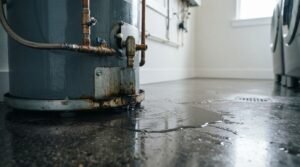
Household and commercial appliances account for a large share of water damage claims. A water heater is a pressurized tank appliance that stores and heats water, and its tank or fittings corrode over years of use until they fail.
Washing machines and dishwashers rely on supply hoses and internal seals that wear out. I’ve replaced enough rubber supply hoses to know that the rubber ones fail far more often than braided stainless steel.
Refrigerator ice makers and water lines are another quiet source. These thin plastic lines run behind cabinetry and can crack without any visible warning sign.
Common Appliance Failure Points
Water heater tanks typically last 8 to 12 years before internal corrosion causes a leak or full tank failure. Supply hoses on washers and dishwashers are the second most common failure point I encounter in service calls.
Dishwasher door seals and drain hoses degrade with heat and detergent exposure over time. Ice maker lines crack from age and vibration, especially in units installed more than a decade ago.
Warning Signs Before Total Failure
Rust-colored water, popping or rumbling sounds from a water heater, and a damp spot under an appliance are all early warning signs. I encourage property owners to check these areas seasonally rather than waiting for a full failure.
A dripping supply line under a sink rarely fixes itself. It gets worse, and it usually gets worse when nobody’s home to catch it.
HVAC & Sump Pump Failures
HVAC systems and sump pumps are mechanical systems that most property owners forget about until they fail. A clogged condensate line lets AC unit condensation back up into ductwork or drip through ceilings below.
Sump pumps protect basements from groundwater intrusion, and they fail most often exactly when they’re needed most, during heavy rain when the power grid is also under stress. A sump pump without battery backup is only as reliable as the electrical grid feeding it.
I’ve seen commercial HVAC rooftop units leak for months through a cracked drain pan, damaging ceiling tiles and insulation on multiple floors below before anyone traced the source.
Roof Leaks & Damaged Roofing Materials
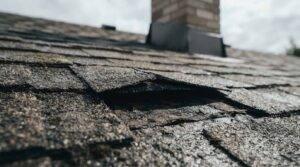
Roofing failure lets water travel from the exterior into attics, insulation, and ceilings, often traveling far from the actual point of entry. Missing or cracked shingles, deteriorated flashing around chimneys and vents, and worn underlayment are the most frequent culprits.
Water doesn’t always drip straight down from where it enters. It can travel along rafters and framing, showing up as a stain several feet from the actual leak point, which makes roof leaks some of the trickiest sources to diagnose without a trained eye.
How Roof Age & Weather Exposure Accelerate Leaks
Asphalt shingles typically last 15 to 20 years, and their protective granules wear away steadily under UV exposure and freeze-thaw cycles. The National Roofing Contractors Association notes that regular inspections after severe storms catch damage before it becomes an interior leak.
Hail impact, wind uplift, and ice dams all accelerate roof aging well beyond the material’s expected lifespan. A roof that’s 18 years old and has weathered three major storms behaves more like a 25-year-old roof.
Foundation Cracks & Basement Water Intrusion
Foundation cracks form when hydrostatic pressure from saturated soil pushes against basement walls with more force than the concrete can resist. Water finds its way through even hairline cracks once that pressure builds after heavy rain or snowmelt.
Poor exterior grading that slopes toward a structure instead of away from it sends rainwater directly against foundation walls. I check grading first on any basement flooding call, because it’s the most common contributing factor I find.
Cracked foundations aren’t always visible from inside. A crack below grade can leak for years, showing up only as efflorescence, a white mineral deposit, or a persistent musty smell in the basement.
Window, Door & Siding Seal Failures
Caulking and weatherstripping around windows and doors deteriorate under sun exposure and temperature swings, typically needing replacement every 5 to 10 years. Once a seal fails, wind-driven rain finds the gap and works its way into wall cavities.
Siding gaps and damaged flashing around window and door frames create similar entry points. These leaks are often slow and hidden inside wall assemblies, causing framing rot long before any interior sign appears.
I’ve opened up exterior walls where the drywall looked fine, but the studs behind it were black with mold, all from a seal that failed years earlier.
Severe Weather & Storm-Related Flooding
Severe weather is an unpredictable but recurring cause of large-scale water damage across the US. Heavy rainfall events, hurricanes, and flash flooding overwhelm drainage systems that were never designed for that volume of water in a short window.
The National Oceanic and Atmospheric Administration reports that heavy precipitation events have become more frequent across much of the country in recent years, which means properties that never flooded before are now at risk.
Heavy Rainfall & Flash Flooding
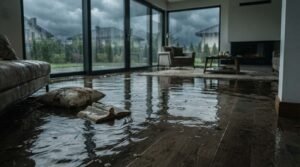
Flash flooding happens when rainfall exceeds a landscape’s ability to absorb or drain water, sending it rushing across the surface instead. Urban areas with heavy pavement coverage flood faster because there’s less soil to absorb the runoff.
A property doesn’t need to sit near a river to flood. Poor municipal drainage combined with a few inches of rain in a short period is enough to push water into basements and ground-floor units.
Hurricane & Storm Surge Damage
Storm surge is ocean water pushed inland by hurricane-force winds, and it causes some of the most destructive flooding events in coastal states. FEMA maintains flood zone maps that show which properties face elevated storm surge risk, and I recommend every coastal property owner check theirs.
Wind-driven rain during a hurricane also penetrates roofs and walls that would otherwise hold up fine in a normal storm. The combination of surge, rain, and wind is why hurricane damage claims involve both structural and water damage components together.
Sewer Backups & Drain Line Blockages
A sewer backup happens when wastewater can’t flow through the main line and reverses direction back into a property through drains and toilets. Tree root intrusion is one of the most common causes, as roots seek out moisture and infiltrate aging clay or cast iron pipes.
Municipal sewer systems can also back up during heavy rain when combined sewer systems exceed capacity, pushing wastewater back through private lines. This type of damage carries a contamination risk that clean water flooding doesn’t, which changes how the cleanup has to happen.
Grease buildup in commercial kitchen drain lines causes a similar blockage pattern over time, restricting flow until a backup becomes inevitable.
Poor Drainage, Grading & Gutter Overflow
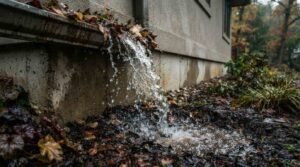
Gutters and downspouts direct roof runoff away from a foundation, and when they clog with leaves and debris, that water pours straight down next to the foundation instead. Over a single storm season, this misdirected water saturates soil against the foundation wall.
Improper grading, where the ground slopes toward a building instead of away from it, sends surface water toward the foundation with every rain event. I see this most in older properties where landscaping has shifted the original grade over decades.
Clogged downspout extensions and disconnected gutter sections are simple fixes that prevent a large share of basement water intrusion I respond to.
Human Error & Preventable Water Damage Causes
A meaningful share of water damage traces back to preventable human actions rather than equipment failure. Leaving a washing machine running unattended, forgetting a bathtub faucet on, or failing to shut off the main water supply before a long vacation all create damage that proper habits would have prevented.
Delayed maintenance is the quieter version of this problem. Ignoring a small leak, ignoring a water heater past its expected lifespan, or skipping annual HVAC service all turn a minor fix into a major loss.
I tell every property owner the same thing: the properties I see the worst damage in are almost always the ones where a small warning sign got ignored for months.
Conclusion
Water damage rarely comes from one single event. Plumbing failures, roofing and foundation weaknesses, severe weather, drainage problems, and everyday oversights all compound into the losses property owners actually deal with.
Recognizing these sources early gives you the power to act before small problems become expensive ones. Seasonal inspections and prompt attention to warning signs protect both the structure and everyone inside it.
We built Mr. Damage Rescue to respond fast when prevention isn’t enough. Reach out to our team the moment you spot water damage, and we’ll restore your property safely and efficiently.
Frequently Asked Questions
What is the most common cause of water damage in homes?
Plumbing failures, including burst pipes and worn supply lines, cause the largest share of residential water damage. Appliance hose failures and slow leaks follow closely behind as frequent contributors.
How does a pipe burst from freezing temperatures?
Water expands as it freezes inside a pipe, building pressure between the ice blockage and a closed faucet. That pressure eventually splits the pipe wall, and the burst becomes visible once the ice thaws.
Can a small roof leak cause major damage?
A small roof leak can travel along framing before showing up as an interior stain, often causing hidden damage for months. Left unaddressed, it leads to rotted framing, ruined insulation, and mold growth.
Why does my basement flood every time it rains heavily?
Basement flooding usually comes from poor exterior grading, clogged gutters, or hydrostatic pressure from saturated soil against the foundation. Fixing drainage around the foundation solves most recurring basement flooding.
Is sewer backup water damage more dangerous than a clean water leak?
Sewer backup water carries contamination risk that clean water from a pipe leak does not. It requires specialized cleanup and sanitization to protect occupant health safely.
What role does severe weather play in water damage claims?
Severe weather, including heavy rainfall and hurricanes, overwhelms drainage systems and pushes storm surge into coastal properties. These events cause some of the largest single-incident water damage losses nationwide.
How can I prevent water damage caused by human error?
Shutting off the main water supply before extended absences and addressing small leaks immediately prevent most human-error-related damage. Regular seasonal inspections catch warning signs before they become emergencies.