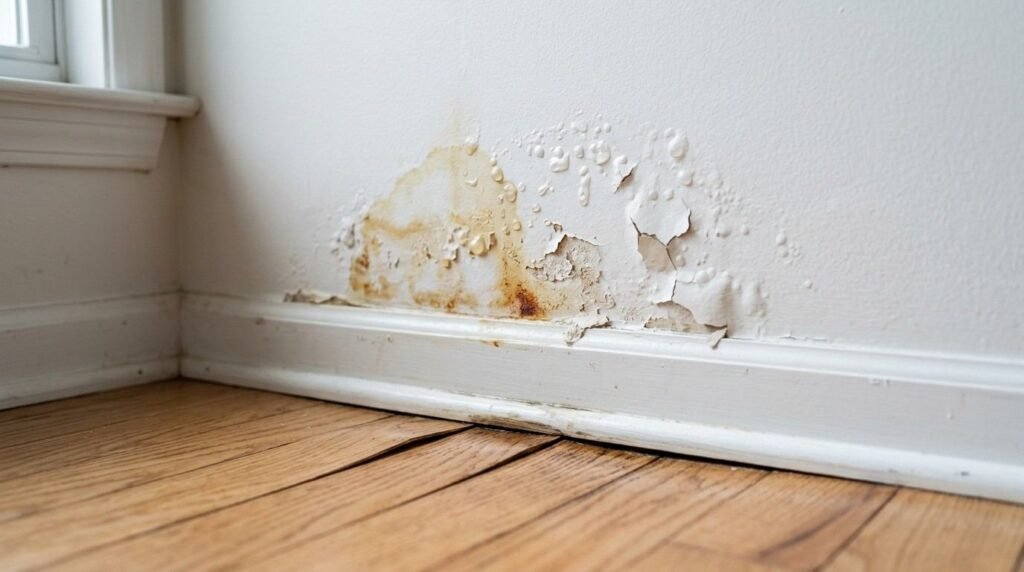
Water stains that keep bleeding through fresh paint usually mean the moisture source was never actually fixed. I see this constantly with properties that had “restoration” done years ago. The stain gets painted over, everyone moves on, and six months later it’s back darker than before.
That callback stain is the tip of the iceberg. Water damage that wasn’t repaired properly hides most of its real cost behind drywall, under flooring, and inside framing where nobody’s looking.
I’m walking through the visible cosmetic red flags, the structural warning signs that mean something’s actually failing, the hidden moisture and air quality clues most people miss entirely, and what actually causes restoration jobs to fail in the first place.
Persistent Water Stains That Keep Coming Back
A recurring water stain is a stain that reappears on a ceiling, wall, or floor after being cleaned, painted over, or patched. I treat any repeat stain as a hard signal that the original moisture source is still active somewhere behind the surface.
Painters and homeowners often blame the paint itself. And that’s rarely the actual problem.
The real issue sits behind the wall or above the ceiling, usually in the form of a slow leak, a poorly sealed penetration, or moisture trapped in insulation that never fully dried. Stain-blocking primer covers the discoloration but does nothing to stop the source. Within a few months, the tannins and minerals in the water bleed straight back through.
I’ve walked into homes where the same ceiling stain has been painted over three separate times by three separate owners. Nobody ever pulled back the drywall to check what was happening above it.
A stain that returns in the exact same spot, same shape, same color, is not a coincidence. It’s a map showing exactly where the water is still getting in.
Peeling, Bubbling, or Discolored Paint and Wallpaper
Peeling paint and bubbling wallpaper happen when moisture gets trapped between the wall surface and its finish, breaking down the adhesive bond from underneath. If a wall was “restored” and the paint or wallpaper starts bubbling again within a year, the drying process behind that wall was incomplete.
Proper water damage restoration includes moisture readings taken with a meter, not just a visual check. Drywall can look dry on the surface and still hold 20% or more moisture content deep inside the material.
That trapped moisture pushes outward over time. Paint bubbles first, then cracks, then peels away in sheets.
Discoloration is the earlier warning sign, showing up as yellow, brown, or copper-toned patches before any physical bubbling starts. I always tell property owners: if you paint over discoloration without addressing what’s underneath, you’re buying a few months, not a fix.
Warped, Buckled, or Soft Flooring
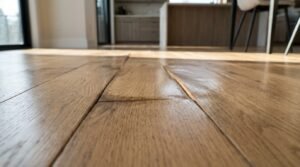
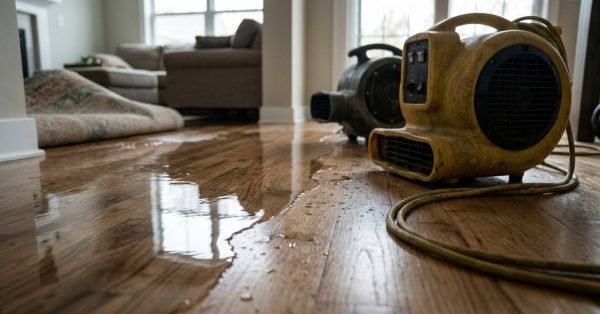
Warped flooring is wood, laminate, or vinyl flooring that has physically changed shape, direction, or texture because it absorbed moisture it was never supposed to hold. Hardwood cups and crowns. Laminate swells at the seams. Vinyl and tile can develop a soft, spongy give underfoot.
Flooring damage is one of the clearest signs a prior restoration missed the subfloor entirely. Contractors sometimes replace visible surface flooring without pulling it up to check the plywood or concrete underneath.
If new flooring goes down over a subfloor that’s still holding moisture, the same warping shows up again in a matter of months. A soft spot when you walk across a room, especially near a bathroom, kitchen, or laundry area, means moisture is sitting in the subfloor right now.
I’ve replaced flooring twice in the same room for clients before anyone finally checked what was happening underneath.
Sagging Ceilings or Drywall That Feels Soft
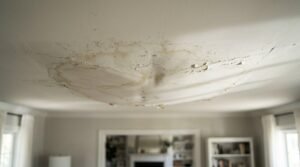
A sagging ceiling is drywall or plaster that has lost its structural rigidity because the paper facing and gypsum core absorbed water and started to break down. Soft drywall you can push a finger into means the material has already failed internally, even where the surface still looks intact.
This is one of the more serious signs on this list, because ceiling drywall carries weight. Insulation above it holds water like a sponge, and that added weight combined with weakened gypsum can lead to a partial or full ceiling collapse.
I don’t consider a sagging ceiling a cosmetic issue at all. It’s a structural failure in progress.
Any restoration job that patched a ceiling without confirming the insulation and framing above it were fully dry left the underlying problem completely untouched.
Wood Rot and Weakening Structural Framing
Wood rot is the decay of structural or framing lumber caused by fungi that thrive in sustained moisture above roughly 20% wood moisture content. Two types show up in poorly resolved water damage: brown rot, which breaks wood down into brittle cube-shaped chunks, and white rot, which leaves wood feeling stringy and spongy.
Framing members, floor joists, and sill plates are the most common places I find active rot in properties that had incomplete past restoration. These are structural elements, meaning rot here isn’t just a maintenance issue.
It’s a load-bearing concern.
Wood that sounds hollow when tapped, or that a screwdriver sinks into without resistance, has already lost significant structural strength. Left unaddressed, rot spreads to adjacent framing members and can compromise floor or roof support over time.
Cracked or Shifting Foundations and Walls
Foundation cracking after water damage happens when prolonged moisture exposure erodes soil support around a foundation or when water saturates and expands materials like concrete block or brick. New cracks, or old cracks that widen, following a water event are a structural red flag that repair work didn’t address the moisture’s path into the foundation area.
Diagonal cracks radiating from window or door corners, stair-step cracks in masonry, or doors and windows that suddenly stick are all signs of foundation movement. This kind of shifting isn’t cosmetic settling.
It’s a direct structural consequence of unresolved water intrusion around the foundation perimeter. Any restoration that dried the interior of a basement without correcting exterior drainage or grading issues leaves the foundation exposed to the exact same problem during the next heavy rain.
Musty Odors That Won’t Go Away
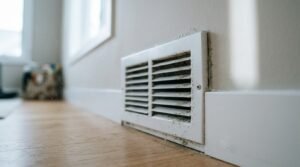
A musty odor is the smell produced by microbial volatile organic compounds, which mold and mildew release as byproducts of their growth. If a property smells musty weeks or months after a restoration was supposedly completed, active microbial growth is still present somewhere in the structure.
Odor doesn’t stay contained to one spot. HVAC systems circulate those microbial compounds throughout the entire building, meaning a smell noticed in a hallway or bedroom often originates from a completely different area, like a wall cavity, crawlspace, or duct system.
Air fresheners and odor-masking sprays only cover the smell temporarily. I treat a returning musty odor as one of the most reliable indicators that a prior restoration job dried the surface but never fully eliminated the moisture feeding microbial growth behind it.
Mold Growth Returning After Cleanup
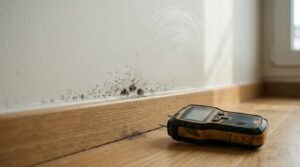
Returning mold growth means visible mold has come back in the same location, or a new location, after a professional or DIY cleanup was already performed. According to the Environmental Protection Agency, mold will regrow anywhere moisture is present, and readily available organic material like drywall paper or wood remains, regardless of whether visible mold was previously cleaned or removed.
That single fact explains almost every case of returning mold I’ve encountered. Surface cleaning with bleach or another cleaner kills visible mold on contact.
It does nothing to remove moisture from the wall cavity feeding the colony from behind. Mold spores are also present in nearly all indoor air at low levels, so any moisture source left unresolved gives those spores exactly what they need to recolonize within days.
Real mold remediation removes the affected material and corrects the moisture source. Anything short of that is a temporary cosmetic fix.
High Humidity or Condensation That Persists Indoors
Persistent indoor condensation is water forming on windows, pipes, or interior surfaces because indoor humidity levels stay elevated well beyond what a property’s ventilation and dehumidification should allow. The Environmental Protection Agency recommends keeping indoor relative humidity between 30% and 50% to prevent condensation and limit mold growth.
Homes and buildings that had water damage restoration performed sometimes come out the other side with a structural moisture reservoir still present, whether in framing, insulation, or subflooring. That trapped moisture slowly releases into the air over weeks and months, keeping ambient humidity elevated long after the visible water event ended.
Condensation on single-pane windows in winter is normal to a point. Condensation on interior walls, closet doors, or metal fixtures in rooms that were previously water-damaged is not.
I always recommend a hygrometer reading in any room that had prior water intrusion, since sustained readings above 55% typically point to a moisture source that restoration never fully corrected.
Why Water Damage Repairs Fail in the First Place
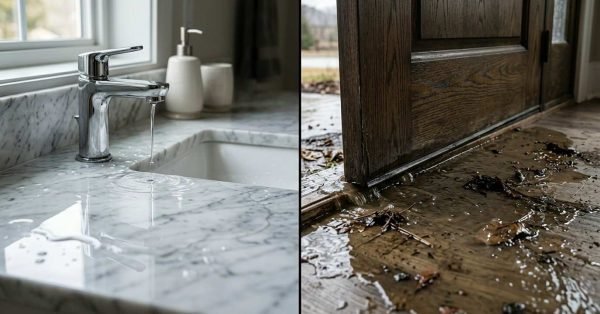
Restoration failures come down to a short list of root causes I see repeated across residential and commercial properties alike. Incomplete drying is the most common one, where technicians dry visible surfaces but skip moisture readings inside wall cavities, subfloors, and framing.
Skipped demolition is another major cause. Saturated drywall, insulation, and subflooring get dried in place instead of removed, even though wet insulation in particular almost never dries fully once it’s been saturated.
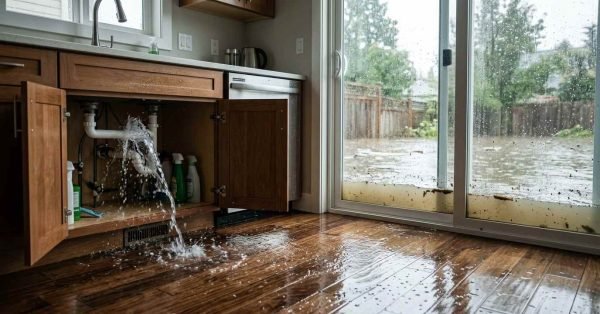
Rushed timelines from insurance pressure or budget cuts lead to drying equipment being pulled before humidity and material moisture readings actually hit target levels. And unaddressed source problems, like a slow roof leak, poor grading, or a hidden plumbing issue, mean the property gets dried once and then re-soaked the next time it rains or the pipe leaks again.
A property showing two or more of the signs covered above almost always has at least one of these root causes sitting unresolved behind the walls. We look at all of it together, not just the surface symptom, before calling any restoration complete.
Conclusion
Recurring stains, soft drywall, musty odors, and lingering humidity all point to the same underlying issue: moisture that was never fully removed the first time. These signs compound quietly, turning a contained problem into structural and health risks.
Left unresolved, incomplete restoration invites mold regrowth, weakened framing, and repeat repair costs that outpace the price of doing it right. Catching these signs early protects both the property and the people inside it.
We inspect thoroughly, verify moisture levels at every stage, and don’t call a job finished until the numbers confirm it. Reach out to Mr. Damage Rescue for a proper assessment before a missed repair turns into a much bigger problem.
Frequently Asked Questions
How long after water damage can mold start growing?
Mold can begin growing within 24 to 48 hours of sustained moisture exposure. That short window is why incomplete drying after a restoration job so often leads to mold returning within days or weeks.
Can water damage repairs fail even if the area looked completely dry?
Yes, surface dryness doesn’t guarantee the material underneath is dry. Moisture often remains trapped in wall cavities, subfloors, or insulation well after the visible surface feels dry to the touch.
Is it normal for a repaired ceiling stain to come back?
No, a returning ceiling stain almost always means the original moisture source was never fully resolved. Repainting covers the stain temporarily but doesn’t stop the water causing it.
What does a musty smell mean after restoration is finished?
A lingering musty smell usually signals active mold or mildew growth somewhere in the structure. It means moisture wasn’t fully removed during the original restoration process.
Does soft or spongy drywall always need to be replaced?
In most cases, yes, since soft drywall has already lost structural integrity from water saturation. Painting over it doesn’t restore strength, and the material will continue to weaken.
How do I know if my subfloor still has moisture in it?
A professional moisture meter reading is the only reliable way to confirm subfloor dryness. Soft spots, warping, or squeaking near previously wet areas are strong warning signs worth checking.
Can foundation cracks be caused by water damage?
Yes, prolonged water exposure can erode soil support or saturate masonry, leading to new or widening foundation cracks. Diagonal cracks or sticking doors following a water event are common indicators.
Why does indoor humidity stay high after water damage is repaired?
Trapped structural moisture in framing, insulation, or subflooring slowly releases into the air over time. This keeps ambient humidity elevated even after visible water damage appears resolved.
What should I do if I notice signs of improperly repaired water damage?
Schedule a professional moisture inspection as soon as possible to identify the exact source and extent of the problem. Waiting allows mold growth, structural decay, and repair costs to increase significantly.