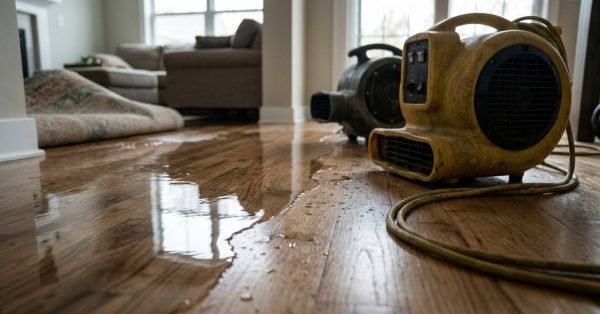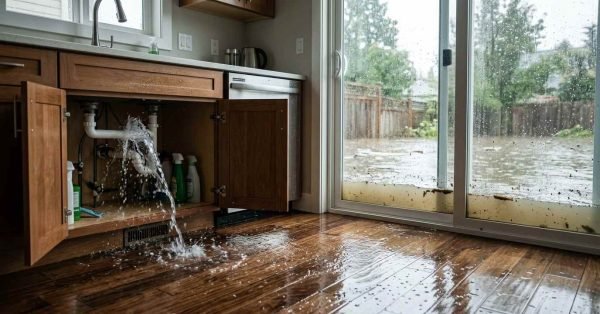
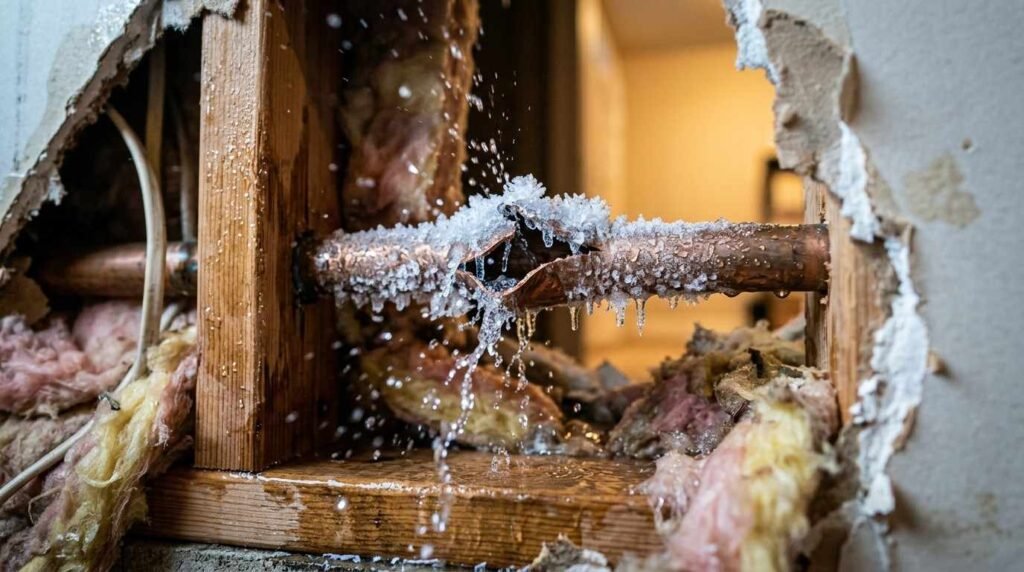
A frozen pipe becomes a serious problem the moment ice inside it expands enough to crack the pipe wall. Once that pipe thaws, water pours into walls, floors, and ceilings faster than most homeowners expect. I’ve walked into homes where a single burst pipe soaked three rooms before anyone even noticed the water shutoff valve.
Winter cold snaps put every exposed or poorly insulated pipe at risk, and the damage doesn’t stop at the leak itself. Water travels along framing, soaks insulation, and starts breeding mold within 24 to 48 hours if nobody responds fast.
I cover why pipes freeze and how to catch the warning signs early, what the professional restoration process actually involves from extraction through drying and sanitization, how repairs and residential-versus-commercial restoration differ, and the prevention steps that keep this from happening again next winter.
Why Pipes Freeze and Burst in the First Place
Frozen pipe damage is a structural failure that occurs when ice forms inside a water line and expands beyond the pipe’s capacity to hold it. Water is one of the few substances that expands as it freezes, growing roughly 9% in volume, and that pressure has nowhere to go inside a sealed pipe.
Copper and PVC pipes both crack under this pressure, though copper tends to split along a seam while PVC often shatters. The rupture usually happens away from the ice blockage itself, at a weaker point in the pipe where pressure concentrates.
The Science of Ice Expansion Inside a Pipe
Ice doesn’t need to fill the entire pipe to cause a break. A blockage forms at one point, and water trapped between that ice plug and a closed faucet has nowhere to release pressure.
That trapped water is what ruptures the pipe wall, not the ice plug itself. This is why the crack often shows up several feet from where the freeze actually started.
Which Pipes Are Most Vulnerable to Freezing
Pipes running through unheated spaces freeze first. I’m talking about crawl spaces, attics, exterior walls, and garages where insulation is thin or nonexistent.
Any supply line feeding an outdoor spigot sits especially high on the risk list. So do pipes against exterior walls in older homes built before modern insulation codes.
Warning Signs of a Frozen or Already-Burst Pipe
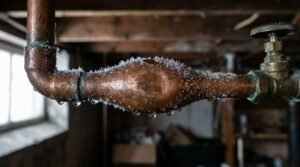
Catching a frozen pipe before it bursts saves thousands in restoration costs. I always tell property owners to trust their instincts here. If something feels off with the water pressure, it usually is.
No Water Flow vs. Trickling Water
A faucet that produces nothing when you turn it on usually points to a fully frozen line upstream. A weak trickle, on the other hand, often means partial ice formation that hasn’t sealed the pipe completely yet.
Either symptom means the same thing: act now. Waiting turns a partial freeze into a full rupture within hours in sustained cold.
Bulging, Frost, or Condensation on Visible Pipes
Any visible pipe showing frost on the outside has ice forming on the inside too. A bulge in a section of pipe is even more urgent since it signals the metal or plastic is already stretching under pressure.
Condensation dripping from a pipe in a cold basement or crawl space is worth checking immediately. It’s often the first physical clue before a full freeze sets in.
What to Do the Moment You Suspect a Frozen Pipe
Fast action here genuinely changes the outcome. I’ve seen homeowners cut their total damage in half just by shutting off water within minutes of noticing a problem.
Shutting Off the Main Water Supply
The main shutoff valve stops new water from feeding a ruptured line, and it’s the single most important action in the first five minutes. Every property owner should know where this valve sits before winter arrives, not during an emergency.
Turning off the water heater matters too, especially if the frozen section feeds it. This prevents additional pressure buildup while the pipe thaws.
Safe Thawing Methods That Won’t Cause a Rupture
A hair dryer on low heat, aimed directly at the frozen section, thaws a pipe gradually without shocking the material. Heating pads and warm towels wrapped around the pipe work the same way.
Open flames and blowtorches are never appropriate here. They heat the pipe unevenly, which increases rupture risk instead of reducing it.
What Happens When a Frozen Pipe Actually Bursts
Once a pipe splits, the damage clock starts immediately. Structural materials absorb water within minutes, and the countdown to mold growth begins the moment surfaces stay wet.
How Fast Water Damage Spreads Through a Structure
Water travels along the path of least resistance, meaning it follows framing members, electrical conduits, and gaps in subfloor down through multiple levels of a building. A leak on a second floor often shows up as a ceiling stain one floor below within an hour.
Drywall absorbs water almost instantly and starts losing structural integrity within the first day. Carpet padding holds moisture even longer, which is why it’s rarely salvageable after a significant burst pipe event.
Immediate Safety Steps Before Restoration Arrives
Cutting power to any affected area protects against electrical hazards, especially where water has reached outlets or fixtures. I always recommend property owners avoid the affected space entirely until a professional confirms it’s safe.
Moving furniture and valuables away from standing water limits secondary damage while waiting for a restoration crew. Photographing the damage for insurance purposes takes just a few minutes and matters enormously later.
The Professional Water Extraction Process
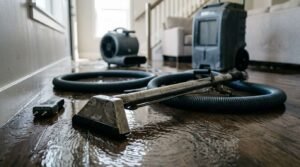
Water extraction is the restoration step where standing and absorbed water gets physically removed from a structure before drying begins. This step determines how much of the remaining process even needs to happen.
Equipment Used to Remove Standing Water
Submersible pumps handle deep standing water quickly, while truck-mounted extraction units pull water out of carpet, padding, and subfloor with far more suction than any consumer wet vac. Technicians choose equipment based on how deep the water sits and what materials it’s touched.
Moisture meters get used throughout extraction, not just at the start. They tell the crew exactly when a surface has released enough water to move into the drying phase.
How Extraction Timing Affects Total Damage
Extraction started within the first 24 to 48 hours dramatically limits how many materials need full replacement. Materials left wet beyond 48 hours usually cross into unsalvageable territory, particularly drywall, insulation, and carpet padding.
This is the core reason emergency response time matters so much in the restoration industry. Every hour of delay adds cost.
Structural Drying and Dehumidification
Drying is the longest phase of most restoration jobs, and it’s also the one property owners misunderstand most. Extraction removes visible water, but drying removes the moisture that’s already soaked into building materials.
Moisture Detection and Monitoring Methods
Infrared cameras locate hidden moisture behind walls and under flooring without any demolition. Penetrating and non-penetrating moisture meters then confirm exact moisture percentages in wood, drywall, and subfloor.
Technicians document these readings daily throughout the drying process. That documentation proves to insurance that the structure reached a safe, dry standard before restoration closed out.
How Long Structural Drying Actually Takes
Most residential drying jobs run three to five days with industrial air movers and dehumidifiers running continuously. Larger commercial spaces or jobs involving dense materials like concrete can extend well past a week.
Removing air movers early, before materials test dry, is one of the most common mistakes in DIY water damage attempts. It traps moisture that surfaces again as mold weeks later.
Cleaning, Sanitization, and Mold Prevention
Once a structure tests dry, cleaning and sanitization address what the water left behind. Frozen pipe water is typically clean water, but it still carries a bacteria risk once it sits against organic building materials for any length of time.
Why Sanitization Matters After Pipe Bursts
Antimicrobial treatments applied to affected framing and subfloor prevent bacterial growth that standing water introduces even from a “clean” source. HEPA vacuuming and air scrubbing remove airborne particulates that regular cleaning misses.
Skipping this step is how a water damage event turns into an indoor air quality problem months later. It’s a step insurance adjusters specifically look for in restoration documentation.
Mold Risk Timeline After Water Exposure
The Environmental Protection Agency notes that mold can begin growing on wet materials within 24 to 48 hours of water exposure. That timeline is exactly why extraction speed and thorough drying matter more than almost any other factor in the whole process.
Once mold establishes itself in wall cavities, remediation becomes a separate, more invasive process. Preventing it during the drying phase is far less disruptive than treating it after the fact.
Repairing the Pipe and Restoring Damaged Materials
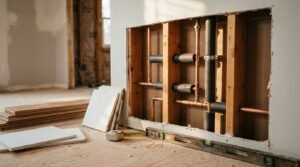
Repair is the phase where a property actually starts looking normal again. It covers both the plumbing fix itself and the rebuild of everything the water touched.
Pipe Repair vs. Full Repipe Decisions
A single localized break often gets a straightforward section replacement, especially in accessible areas like a basement ceiling. A pipe that’s frozen and burst once in a vulnerable, poorly insulated location is a strong candidate for rerouting or better insulation rather than a simple patch.
Older homes with galvanized or outdated piping sometimes warrant a broader conversation about repiping. One frozen pipe event can reveal a systemic vulnerability that’s worth addressing all at once.
Drywall, Flooring, and Insulation Restoration
Water-damaged drywall gets cut back well past the visible stain line since moisture wicks upward and sideways inside the wall cavity. Insulation almost always needs full replacement, since wet fiberglass loses its thermal value permanently.
Flooring decisions depend heavily on material. Solid hardwood sometimes dries and refinishes, while laminate and most engineered flooring typically requires full replacement once water gets underneath it.
Residential vs. Commercial Frozen Pipe Restoration
Residential and commercial restoration share the same core process, but the scale, stakes, and logistics differ substantially. I approach a burst pipe in an office building very differently than one in a single-family home.
How Commercial Restoration Scope Differs
Commercial properties often involve larger square footage, multiple tenants, and building systems like HVAC and fire suppression that interact with the plumbing. A burst pipe in a commercial ceiling can affect several units simultaneously through shared structural elements.
Commercial jobs also demand more equipment deployed at once to keep pace with larger affected areas. Documentation requirements tend to be more rigorous too, since commercial insurance policies and lease agreements add extra layers of accountability.
Business Disruption and Continuity Considerations
A restoration crew working a commercial site plans around active business hours whenever possible, sometimes scheduling the noisiest extraction work overnight. Property managers need a realistic timeline early so they can communicate with tenants and plan around lost operating space.
Minimizing downtime becomes a parallel priority alongside the physical restoration itself. That’s a pressure residential jobs simply don’t carry in the same way.
Preventing Frozen Pipes Before Winter Hits
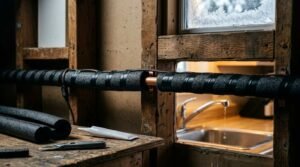
Prevention costs a fraction of what restoration does, and most of it comes down to a handful of straightforward steps taken before temperatures drop.
Insulation and Heat Tape for Exposed Pipes
Foam pipe insulation sleeves cost very little and cover the most vulnerable sections in crawl spaces, attics, and exterior walls. Heat tape adds a layer of active protection for pipes in spaces that regularly dip near freezing.
Sealing gaps and cracks in foundation walls and around pipe entry points blocks the cold air that causes freezing in the first place. This is a simple weekend project that prevents a genuinely expensive emergency.
Maintaining Safe Indoor Temperatures While Away
Keeping a home’s thermostat above 55 degrees Fahrenheit, even during travel, keeps interior pipes above freezing in most climates. Leaving cabinet doors open under sinks lets warm room air reach pipes that sit against exterior walls.
A slow drip from a faucet connected to a vulnerable pipe relieves pressure buildup during a hard freeze. It’s a small, almost free habit that regularly prevents a burst.
Conclusion
Frozen pipes turn into serious structural damage fast, but the restoration process – extraction, drying, sanitization, and repair – brings a property back safely when handled promptly. Understanding each stage helps property owners make confident decisions under stress.
Residential and commercial properties both face this risk every winter, and the difference lies mainly in scale and logistics, not in the fundamental process. Prevention remains the cheapest, easiest step of all.
We built our restoration process at Mr. Damage Rescue around fast response and clear communication, precisely because frozen pipe emergencies don’t wait. Reach out to us the moment you spot a problem, and we’ll walk you through every step from there.
Frequently Asked Questions
How long does frozen pipe water damage restoration take?
Most residential restoration jobs take five to seven days total, covering extraction, three to five days of structural drying, and final repairs. Commercial jobs or extensive damage can extend this timeline significantly.
Can a frozen pipe burst without any warning signs?
A pipe can burst suddenly, but subtle warning signs like reduced water flow or visible frost usually appear first. Regular inspection during cold snaps catches most of these signs before a full rupture happens.
Is frozen pipe water considered clean water damage?
Frozen pipe water typically starts as clean, potable water, classified as Category 1 damage. It still requires sanitization once it sits against building materials, since bacterial growth begins quickly even in clean water sources.
Will homeowners insurance cover frozen pipe damage?
Most homeowners policies cover sudden and accidental frozen pipe bursts, though coverage can be denied if the home was left unheated and unattended. Documentation and prompt reporting significantly affect claim outcomes.
What temperature causes pipes to freeze?
Pipes typically start freezing when surrounding temperatures drop below 20 degrees Fahrenheit for several consecutive hours, especially in uninsulated areas. Wind chill against exterior walls accelerates this process considerably.
Can I thaw a frozen pipe myself safely?
A hair dryer, heating pad, or warm towels applied gradually to a frozen section thaws a pipe safely without added rupture risk. Open flames or extreme heat sources should never be used for this.
Do all frozen pipes eventually burst?
Not every frozen pipe bursts. Many thaw safely once temperatures rise, especially if the ice hasn’t fully sealed the pipe or trapped pressurized water between the blockage and a closed valve.
How much does frozen pipe restoration typically cost?
Costs vary widely based on affected square footage and material damage, ranging from a few hundred dollars for minor leaks to tens of thousands for extensive structural damage. Getting an assessment early keeps costs lower.
What’s the difference between water mitigation and water restoration?
Water mitigation refers to the emergency steps that stop damage from worsening, extraction and drying, while restoration includes the full rebuild process, repairs, and returning a property to its pre-loss condition.