I get this question constantly, and it’s usually asked at the worst possible moment. Water damage and flood damage sound like the same thing, but insurers treat them as two entirely different events with two entirely different coverage outcomes. One typically falls under your standard homeowners policy. The other almost never does.
This distinction determines whether your claim gets paid or denied. A burst pipe and a rising river can leave identical puddles on your living room floor, yet one is covered, and one isn’t, and that gap catches thousands of property owners off guard every year.
I’m going to walk you through the core difference between flood and water damage, what’s typically covered versus excluded under each, how homeowners, flood, and commercial policies actually handle these events, and what to do immediately after damage hits so your claim and your property both come out okay.
Flood Damage vs Water Damage – The Core Difference
Insurance carriers don’t define these terms the way a homeowner does. The distinction hinges entirely on the water’s source and how many properties it affects at once, not on how much damage occurred or how it feels standing in it.
Water damage is sudden, internal, and isolated to your property. Flood damage is external, widespread, and affects multiple properties or a general area at the same time. That single distinction decides which policy pays.
How Insurers Legally Define “Flood”
A flood, in insurance terms, is a general and temporary condition of partial or complete inundation of two or more acres of normally dry land, or two or more properties, from overflowing water. Water damage restoration is the process of extracting, drying, and repairing a structure after water intrusion, and it applies regardless of which policy ends up paying for it.
The key phrase is “two or more properties.” A single home flooding from a burst pipe doesn’t meet this legal threshold, even though the homeowner’s basement looks just as wet as the neighbor’s.
How Insurers Legally Define “Water Damage”
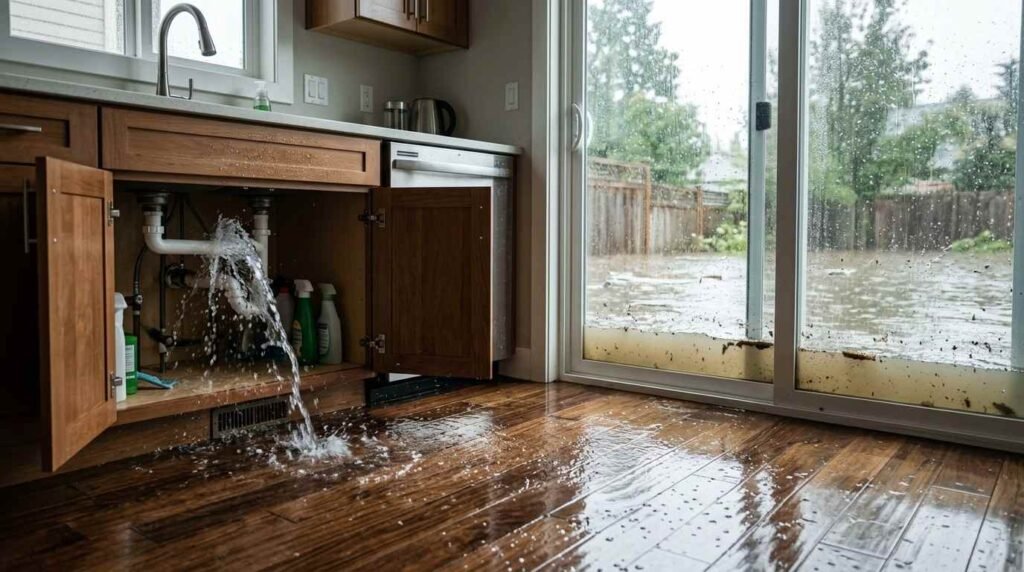
Water damage refers to loss caused by water that originates from within the structure or from a sudden, accidental event on a single property. Think burst pipes, failed water heaters, or a washing machine hose that lets go overnight.
I always tell property owners the same thing: origin matters more than volume. A small ceiling leak from a failed roof flashing is treated completely differently than two inches of floodwater from a swollen creek, even when the creek water causes less total damage.
What Counts as Water Damage (Covered Scenarios)
Most homeowners policies cover water damage that’s sudden and accidental. I’ve restored hundreds of properties under this exact coverage, and the pattern of what qualifies is fairly consistent across major carriers.
The common thread across covered scenarios is that the water source sits inside the structure and the event happens without warning. Gradual damage from neglect almost never qualifies, which trips up a lot of policyholders.

Burst Pipes and Plumbing Failures
A pipe that bursts from freezing, age, or sudden pressure failure is one of the most commonly covered water damage events. Insurers treat this as sudden and accidental because the homeowner had no reasonable way to predict or prevent the exact moment of failure.
I see this constantly in older homes with galvanized plumbing. The pipe holds for twenty years, then fails on a random Tuesday night, and the claim gets approved because the failure itself was unexpected.
Appliance and Equipment Leaks
Washing machines, dishwashers, water heaters, and refrigerator ice makers all fail eventually, and when they do, the resulting water damage is typically covered. The event has to be sudden rather than a slow drip that built up over months.
This is where documentation becomes critical. An adjuster wants evidence the leak started recently, not evidence you ignored a slow leak for a year and let it rot the subfloor.
Storm-Related Roof and Window Intrusion
Wind-driven rain entering through storm-damaged roofing, siding, or windows is generally covered under the wind and hail portion of a homeowners policy. The water damage here is a direct consequence of a covered peril, so it rides along with that peril’s coverage.
I want to be direct about the nuance here. Coverage depends on the storm damaging the structure first, then water entering through that opening, not simply heavy rain finding an existing gap.
What Counts as Flood Damage (Excluded Scenarios)
Standard homeowners and commercial property policies exclude flood damage entirely, full stop, with almost no exceptions. This exclusion has existed in the standard policy form since the 1950s, and it hasn’t meaningfully changed since.
Property owners in flood-prone areas without a separate flood policy often learn this the hardest way possible, standing in a foot of water with a homeowners policy that offers zero help.
Rising Groundwater and Overflow Events
Water that rises from the ground, overflows from a river, lake, or ocean, or accumulates from excessive rainfall across a wide area falls squarely under the flood exclusion. It doesn’t matter if the water damage inside your home looks identical to a burst pipe.
I’ve had clients argue this point with adjusters, and the source always wins the argument. External, widespread rising water is flood, and flood needs its own policy.
Named Storm and FEMA-Declared Flood Events
Hurricanes, tropical storms, and FEMA-declared flood disasters almost always trigger the flood exclusion for the water portion of the damage, even though wind damage from the same storm gets covered separately. This split confuses more homeowners than any other part of the process.
A single hurricane claim can genuinely split into two outcomes: the roof damage from wind gets paid by the homeowners policy, and the storm surge flooding in the basement gets denied outright.
Homeowners Insurance Coverage for Water Damage
A standard homeowners policy, whether it’s an HO-3 or similar form, covers a defined list of water-related perils while excluding others by name. Reading the actual exclusions section matters more than most people realize.
What Standard Policies Typically Include
Sudden plumbing failures, accidental discharge from appliances, and water damage from a covered peril like a storm-damaged roof generally make the covered list. Emergency water extraction, drying, and repair costs following these events are typically included up to the policy limit.
I always recommend clients read the “water damage” section of their declarations page before an emergency, not during one. It’s the only way to actually know your starting position.
Common Exclusions Homeowners Miss
Gradual leaks, seepage through foundation cracks, sewer backup without an endorsement, and any flood-related water are the exclusions that surprise people most. Maintenance-related damage, meaning damage that resulted from a problem you knew about and ignored, gets denied almost universally.
This is the gap where restoration companies add real value beyond the physical work. Pew Research Center reports flood insurance claims averaged over $52,000 per claim in recent years, a number that dwarfs typical water damage claims and explains why the exclusion exists in the first place.
Why Standard Policies Exclude Flood Damage
Flood risk behaves differently than fire or theft risk from an actuarial standpoint, and that difference is the entire reason for the exclusion. Fire tends to strike one property at a time, spreading losses evenly across an insurer’s book of business.
Flood events strike whole neighborhoods simultaneously, creating catastrophic, concentrated losses that private insurers historically couldn’t absorb without going insolvent. That’s the exact reason the federal government stepped in and created a separate flood insurance system decades ago rather than forcing private carriers to cover it.
Flood Insurance Explained (NFIP and Private Options)

Flood coverage exists as a completely separate policy, purchased on top of a standard homeowners or commercial policy, not as an add-on endorsement to it. Property owners in high-risk zones are often required to carry it as a condition of their mortgage.
How the National Flood Insurance Program Works
The National Flood Insurance Program is a federal program that provides flood insurance to property owners, renters, and businesses in participating communities. Coverage typically caps at $250,000 for a home’s structure and $100,000 for contents, with commercial limits set separately.
I tell every client the same practical truth: NFIP policies carry a standard 30-day waiting period before coverage takes effect. Buying a policy the week a storm is forecast almost never helps.
Private Flood Insurance Alternatives
Private flood insurers have expanded significantly over the past several years, often offering higher coverage limits and shorter waiting periods than NFIP policies. These policies can also cover additional living expenses and business interruption, gaps the federal program frequently leaves open.
I’ve watched more commercial clients move toward private flood coverage specifically because NFIP’s commercial limits fall short of actual rebuild costs for larger buildings.
Commercial Property Coverage – Water vs Flood
Commercial property policies follow the same fundamental water-versus-flood split as homeowners policies, but the financial stakes and operational disruption scale up considerably. A restaurant or warehouse losing power and flooring for weeks means lost revenue on top of physical damage.
Business Interruption Considerations
Business interruption coverage typically pays for lost income and ongoing expenses while a commercial property is unusable, but only when the interruption stems from a covered peril. Water damage from a covered event usually triggers this coverage; flood damage without a separate flood policy usually does not.
I push commercial clients hard on this point because the interruption losses often exceed the physical repair costs by a wide margin.
Commercial Flood Policy Gaps
Commercial flood insurance through NFIP caps out lower than most commercial buildings are actually worth, leaving a real gap even for businesses that did the right thing and bought a policy. Facility managers in flood zones need to actively calculate replacement cost against NFIP’s commercial limits rather than assuming the policy covers everything.
Gray Areas – When Coverage Gets Disputed
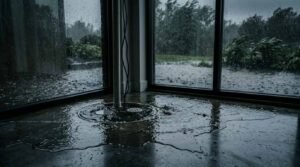
Not every water event fits neatly into “water damage” or “flood damage,” and this gray zone is where most coverage disputes actually happen. I’ve sat across from adjusters arguing these exact scenarios more times than I can count.
Sewer Backup and Sump Pump Failure
Sewer backup and sump pump overflow are both excluded from standard policies by default, and they get treated separately from both the flood and water damage categories. Most insurers sell this as a distinct, low-cost endorsement, and property owners without it are often shocked to learn a sewer backup claim gets denied.
Wind-Driven Rain vs Storm Surge
Wind-driven rain entering through a storm-damaged roof is water damage tied to a wind peril and generally covered. Storm surge, meaning ocean water pushed inland by a hurricane, is flood damage regardless of how the water physically entered the structure. The line between these two during an active hurricane claim gets argued constantly.
What To Do Immediately After Water or Flood Damage
The first 24 to 48 hours after any water event determine both the extent of secondary damage and the strength of your eventual claim. Mold growth can begin within 24 to 48 hours on porous materials, so delay carries a real structural cost on top of the coverage question.
Documenting Damage for Your Claim
Photograph and video every affected area before any cleanup begins, including standing water levels, damaged belongings, and the visible source if one exists. This documentation becomes the backbone of your claim regardless of whether it ends up classified as water damage or flood damage.
When to Call a Restoration Company First
Calling a restoration company before or alongside your insurance company protects the property from secondary damage while the claim gets sorted out. We document everything we find during the initial assessment, and that record often becomes critical evidence in coverage disputes over gray-area events.
How Professional Restoration Supports Your Claim
Professional restoration does more than dry out a structure. It builds the documentation trail, moisture readings, and damage assessment that insurers and adjusters rely on to process a claim correctly, whichever policy ends up paying.

Residential Restoration Process Overview
Residential restoration moves through assessment, water extraction, structural drying, cleaning and sanitization, and repairs, typically completed over several days to a few weeks depending on severity. We coordinate directly with your adjuster throughout, so the paperwork keeps pace with the physical work.
Commercial Restoration Process Overview
Commercial restoration follows the same core stages but adds business continuity planning, phased drying to keep parts of a facility operational, and closer coordination with facility managers and business interruption adjusters. Minimizing downtime matters as much as the physical repair itself.
Conclusion
Flood damage and water damage sound similar but sit under completely different insurance policies with completely different outcomes. Knowing which category your situation falls into before disaster strikes protects both your property and your claim.
The line between these categories gets argued constantly in gray areas like sewer backup and storm surge, which is exactly why documentation and professional assessment matter so much.
We handle both residential and commercial restoration at Mr. Damage Rescue, and we work directly with your insurance process from the first call. Reach out to us the moment water damage hits, and let’s get your property and your claim moving in the right direction together.
Frequently Asked Questions
What’s the main difference between flood damage and water damage?
Water damage originates from a sudden, internal source like a burst pipe on a single property. Flood damage comes from external water affecting two or more properties or acres, like a rising river.
Does homeowners insurance cover flood damage?
Standard homeowners insurance excludes flood damage entirely. Coverage for flooding requires a separate flood insurance policy through NFIP or a private insurer.
Is a burst pipe considered flood damage or water damage?
A burst pipe is classified as water damage since it’s a sudden, internal event on a single property. It’s typically covered under a standard homeowners policy.
How long does the NFIP waiting period last before flood coverage starts?
The National Flood Insurance Program requires a standard 30-day waiting period before a new policy takes effect. Buying coverage right before a forecasted storm usually won’t help.
Does my policy cover sewer backup during a storm?
Sewer backup is excluded from most standard policies unless you’ve purchased a specific endorsement. It’s treated separately from both flood and water damage coverage.
What should I do first after discovering water damage in my home?
Document the damage with photos and video, then call a restoration company immediately. Fast action limits secondary damage and strengthens your insurance claim.
Does commercial insurance handle water and flood damage differently than homeowners insurance?
Commercial policies follow the same water-versus-flood split, but they add business interruption considerations tied to lost income during downtime. Commercial flood limits through NFIP are often lower than actual rebuild costs.
Can wind-driven rain damage be covered even though flood damage isn’t?
Yes. Wind-driven rain entering through storm-damaged roofing or siding is typically covered as water damage tied to a wind peril, while storm surge from the same storm is treated as flood damage.