Water damage gets worse every hour you wait. The first 72 hours after a leak, burst pipe, or flood determine whether your property needs simple drying or a full structural rebuild. I’ve walked into homes where a fast first hour saved a floor, and I’ve walked into homes where a delayed call turned drywall into mold colonies.
This window is not flexible. Water travels fast, saturates materials on contact, and mold spores start colonizing damp surfaces within 24 to 48 hours. Every action in this guide protects your family, your tenants, your employees, and your bottom line.
I walk you through the first 30 minutes, the critical calls to make, what professional extraction and drying actually look like, how residential and commercial responses differ, and the mistakes that turn a manageable problem into a total loss.
The First 30 Minutes: Safety and Immediate Actions
The first half hour is about survival, not salvage. I care about people and pets first, property second, every single time.
Water and electricity together kill. That combination sends people to emergency rooms every year during flood events.
Shutting Off Power and Water Sources Safely
I shut off the main water valve first when the source is a plumbing failure. It stops the flooding from getting worse while everything else happens around it.
Electricity gets shut off at the breaker panel, not at the outlet. Standing water near an outlet or a panel means I call an electrician before I touch anything, because a wet breaker box is not a DIY job.
When to Evacuate vs. When It’s Safe to Stay
Sewage backup, structural instability, or visible electrical hazards mean immediate evacuation. Category 3 black water contamination is a health hazard the moment it touches skin, so nobody stays in a room with it.
Clean water from a supply line break is a different situation. I stay, contain it, and start documentation, because clean water damage carries lower immediate health risk.
Hour 1 to Hour 6: Stopping the Water and Documenting Damage
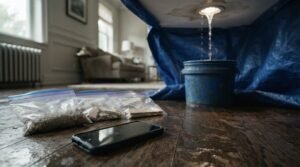
Once safety is handled, the priority shifts to stopping the source and creating a record. Insurance claims live or die on documentation quality.
Locating and Stopping the Water Source
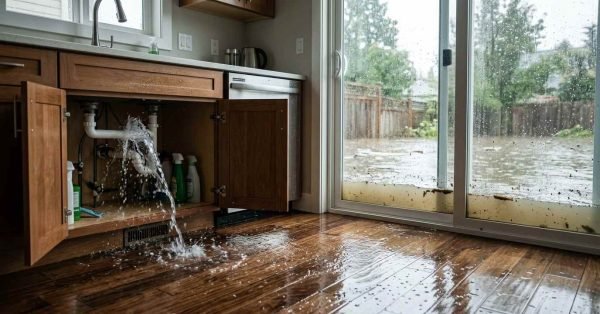
A burst pipe, failed appliance hose, or roof leak each has a different stop point. I trace the water back to its origin instead of just mopping up the puddle, because the puddle keeps returning until the source is stopped.
Appliance failures usually have a simple shutoff valve behind the unit. Roof leaks during storms are harder to stop immediately, so containment with buckets and tarps becomes the interim plan until a roofer arrives.
Photographing Damage for Insurance Claims
I photograph everything before I move a single item. Wide shots of the room, close-ups of damaged materials, and timestamps all matter for the claim.
Insurance claim denials frequently happen when policyholders throw away damaged items before an adjuster inspects them. Keep samples of ruined materials in a bag until the adjuster tells you otherwise.
Calling for Professional Help: Who to Contact First
The order of phone calls in the first hour changes outcomes. I call restoration before I call insurance in most active-flooding situations, because stopping the damage matters more than starting the paperwork.
Emergency Restoration Contractors vs. Insurance Adjusters
A restoration contractor stops active damage today. An adjuster documents damage for a claim, which can take days to schedule.
I call the restoration company immediately and my insurance company within the same day. Most policies allow emergency mitigation before an adjuster visit, and delaying mitigation to “wait for approval” often costs more than it saves.
What Information to Have Ready When You Call
A restoration company needs the source of water, the approximate square footage affected, and whether the water is clean, gray, or contaminated. I also have my policy number ready when I call insurance, along with photos already taken.
Response time commitments vary by company, and I ask directly how fast a crew arrives on-site. A response under two hours for active flooding is a reasonable expectation from a properly staffed team.
Hours 6 to 24: Water Extraction and Damage Assessment
Professional response starts with pulling standing water and identifying exactly what got wet, how deep, and how contaminated. This assessment shapes every decision that follows.
Categories of Water Damage (Clean Water, Gray Water, Black Water)
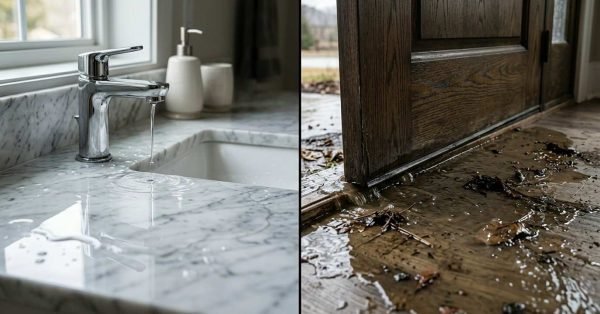
Water damage is a contaminated liquid that is classified by source and health risk into three categories used throughout the restoration industry. Clean water comes from supply lines and carries the lowest health risk. Gray water comes from appliances like dishwashers and washing machines and carries some contamination. Black water comes from sewage or flooding and carries serious pathogens.
I treat each category differently because the health risk changes what gets removed versus what gets dried and kept. Category 3 water almost always means removing porous materials like carpet padding and drywall, not drying them in place.
Moisture Detection and Assessment Tools Used
Moisture meters, thermal imaging cameras, and hygrometers tell a restoration crew what the eye cannot see. Water travels inside wall cavities and under flooring long after the visible puddle is gone.
I’ve seen surfaces that looked completely dry read 40% moisture content on a meter. Skipping this step means drying stops too early and mold grows behind a wall nobody checked.
What Professional Emergency Response Actually Involves
Homeowners often assume “emergency response” just means someone shows up with a wet vac. The actual process is more structured than that.
Emergency Response Timelines and Guarantees
Most established restoration companies commit to arrival within one to four hours for active water emergencies, 24 hours a day. The Institute of Inspection, Cleaning and Restoration Certification (IICRC) sets the S500 standard for water damage restoration that governs response protocols across the industry.
I look for a written response-time commitment, not a verbal promise, before I hire anyone for an emergency.
Equipment Used in the First Response
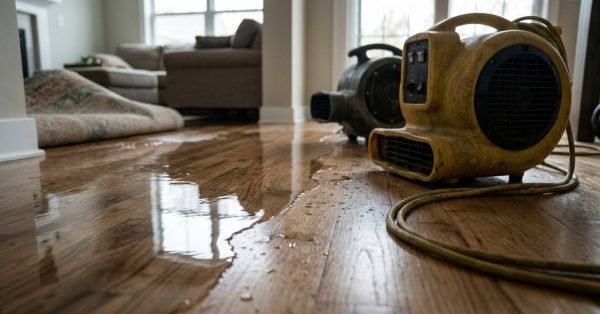
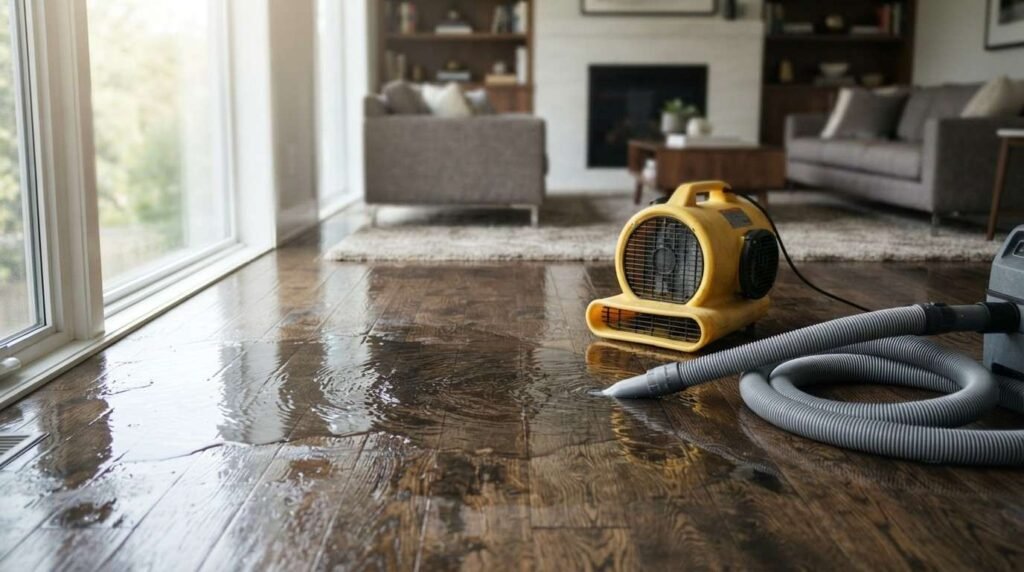
Truck-mounted extraction units pull hundreds of gallons of water faster than portable units. Air movers and commercial dehumidifiers go in immediately after extraction, not days later.
The right equipment on-site in hour one changes the entire trajectory of the project. Under-equipped crews stretch a three-day dry-out into a two-week ordeal.
Hours 24 to 48: Structural Drying and Dehumidification Begins
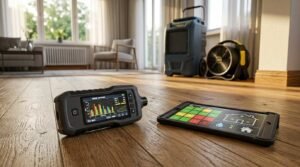
This phase is where the property actually starts recovering instead of just being emergency-managed. Drying is a science, not a guessing game.
How Drying Equipment Is Positioned and Monitored
Air movers get positioned to create airflow across wet surfaces, not just blow air randomly around a room. Dehumidifiers pull moisture out of the air so the drying materials have somewhere for that moisture to go.
I monitor moisture readings daily during this phase, not just at the start and end. Drying logs track progress and prove to insurance that the process followed industry standards.
Signs Drying Is Working vs. Signs of a Problem
Moisture readings dropping steadily day over day mean the process is working. Readings that plateau or a musty smell developing mid-dry-out both signal a problem that needs immediate attention.
A single, honest reality check: drying that stalls for more than 24 hours needs a professional reassessment, not more patience.
Protecting Your Belongings and Valuables During the First 72 Hours
Structural drying protects the building. Content protection protects everything inside it, and those are two different jobs running at the same time.
What Can Be Saved vs. What Needs Replacement
Solid wood furniture and non-porous items usually survive with proper drying. Upholstered furniture, mattresses, and porous materials soaked in gray or black water typically need replacement, not restoration.
I sort items into save, question, and discard piles within the first day. Waiting longer on that decision often turns a “question” item into mold-contaminated waste.
Content Pack-Out and Storage Considerations
Large loss situations sometimes require moving unaffected belongings to a separate storage facility while structural work happens. This protects items from dust, further water exposure, and accidental damage during repairs.
I document every item that leaves the property with photos and an inventory list. That inventory protects both the homeowner and the restoration company from disputes later.
Mold Risk in the First 72 Hours and How to Prevent It
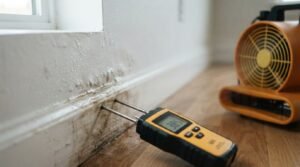
Mold is the single biggest reason speed matters so much in this entire process. Every hour of delay increases the mold risk measurably.
The 24-48 Hour Mold Growth Window
Mold spores are microorganisms present in nearly all indoor and outdoor environments that begin colonizing damp organic materials within 24 to 48 hours of sustained moisture exposure. The Environmental Protection Agency confirms this timeline in its official mold and moisture guidance, which is why speed is treated as a health issue, not just a property issue.
I never treat this window as flexible. A property dried within 48 hours has a dramatically lower mold remediation cost than one left wet for four or five days.
Early Warning Signs of Mold Development
A musty odor is usually the first sign, appearing before any visible growth. Discoloration on drywall, baseboards, or ceiling tiles follows shortly after if drying hasn’t fully resolved the moisture.
I check hidden areas too, behind baseboards and inside cabinet toe-kicks, because visible surfaces dry faster than hidden cavities.
Residential vs. Commercial Emergency Response Differences
A flooded house and a flooded office building need fundamentally different response plans, even though the physics of water damage stay the same.
Business Continuity and Tenant Communication Needs
Commercial properties need a plan for keeping operations running, or at least communicating clearly with employees, customers, and tenants about closures. Multi-tenant buildings add another layer of complexity, since one unit’s water damage often affects the units below or beside it.
I coordinate directly with property managers on phased restoration so parts of a building can reopen before the entire project finishes. That phased approach protects revenue during a long restoration timeline.
Residential Family Safety and Displacement Considerations
Homeowners deal with a different kind of disruption: where the family sleeps tonight, what happens to pets, and how kids’ routines get protected during a chaotic week. Temporary displacement to a hotel or a relative’s home is common for severe residential losses.
I talk families through those logistics early, because the emotional weight of losing normalcy at home is different from a business losing a few days of revenue.
Common Mistakes That Make Water Damage Worse in the First 72 Hours

I’ve seen well-intentioned homeowners turn a manageable loss into a total loss through a handful of repeated mistakes.
DIY Water Removal Risks
A shop vac and some towels feel productive, but they leave moisture trapped in materials that look dry on the surface. That trapped moisture becomes the mold problem three weeks later.
Electrical hazards in standing water also make DIY extraction genuinely dangerous, not just ineffective.
Delaying Professional Response
Waiting for insurance approval before starting mitigation costs real money. Most policies expect reasonable emergency action to prevent further damage, and delay can actually work against a claim rather than protect it.
I call for help the same hour I find the damage, every time, because the cost of a fast response is always lower than the cost of a slow one.
What Happens After the First 72 Hours
The emergency phase ends once the property stops actively losing ground. What comes next is a longer, calmer process focused on full recovery.
Transitioning from Emergency Response to Full Restoration
Structural repairs, replacing removed materials, repainting, and final inspections happen after drying is complete and verified. This phase moves at a completely different pace than the emergency response did.
I confirm moisture readings are fully normalized before any rebuild work starts, because rebuilding over damp materials creates hidden problems down the road.
Setting Realistic Expectations for Full Recovery Timeline
Full restoration timelines run anywhere from a few weeks for minor damage to several months for major structural loss. I set that expectation early so nobody is blindsided by a longer-than-expected recovery.
We at Mr. Damage Rescue walk every property owner through this exact timeline from the first call. If you’re in the middle of the first 72 hours right now, reach out, and we’ll get a crew moving today.
Conclusion
Water damage rewards speed and punishes hesitation, plain and simple. Every hour inside that first 72-hour window either protects your property or costs you more in repairs later.
We built this guide from the calls that went right and the ones that went wrong. The difference almost always traced back to how fast someone acted in hour one.
Contact Mr. Damage Rescue the moment you find water damage. Our team responds fast, documents everything correctly, and gets your property back to normal with the fewest possible surprises.
Frequently Asked Questions
What should I do in the first 10 minutes of discovering water damage?
Shut off the water source and power to affected areas if it’s safe to do so. Then call a restoration professional immediately, since the first hour matters more than any other.
How fast should a restoration company respond to an emergency call?
Most reputable companies commit to arrival within one to four hours for active water emergencies. Anything slower increases your risk of secondary damage and mold growth significantly.
Can I stay in my home during water damage restoration?
Clean water damage usually allows you to stay, depending on the affected areas. Category 3 contaminated water or structural instability typically requires temporary evacuation for safety.
How do I know if my water damage is clean, gray, or black water?
Clean water comes from supply lines with no contamination. Gray water comes from appliances, and black water comes from sewage or outdoor flooding, carrying the highest health risk.
Will my insurance cover emergency water damage response?
Most homeowner and commercial policies cover sudden water damage from covered perils like burst pipes. I document everything and call insurance the same day to start the claim process correctly.
How long does it take for mold to start growing after water damage?
Mold colonization typically begins within 24 to 48 hours of sustained moisture exposure. That’s why drying equipment needs to be running well before that window closes.
What’s the difference between residential and commercial water damage response?
Commercial response focuses heavily on business continuity, tenant communication, and phased reopening. Residential response focuses more on family displacement, personal belongings, and daily living disruption.
Should I try to remove water myself before professionals arrive?
Light surface water is fine to blot up with towels while waiting. Standing water, especially near electrical sources or from contaminated sources, should be left to professional extraction equipment.