Water damage restoration is the structured process of removing water, drying a property, and repairing what got damaged, and most jobs run three to five days for standard residential losses. I’ve walked enough homeowners through this to know the not-knowing is worse than the water itself.
A burst pipe or flooded basement puts your structure, your belongings, and your health at risk the longer water sits. Mold starts within 24 to 48 hours, and every hour of delay adds to the final bill.
I’m covering what restoration actually involves and how to spot damage early, the step-by-step process from extraction through repairs, what it costs and how long it takes, how residential and commercial jobs differ and how insurance fits in, and what separates a company worth hiring from one that isn’t.
What Water Damage Restoration Actually Involves
Water damage restoration is a multi-stage process that removes standing water, dries out structural materials, and repairs or replaces anything the water ruined. It’s not just “cleanup.” It’s assessment, extraction, drying, sanitizing, and rebuilding, in that order.
I think of it as triage first, then treatment. The triage phase figures out how bad it is and where the water traveled. The treatment phase actually fixes it.
Restoration differs from simple water removal because it addresses what’s invisible. Water gets into subfloors, wall cavities, and insulation where you can’t see it, and leaving that moisture behind is how small leaks turn into six-figure mold remediation jobs.
We built our process around catching that invisible moisture before it becomes a bigger problem.
Signs You Have Water Damage That Needs Professional Attention
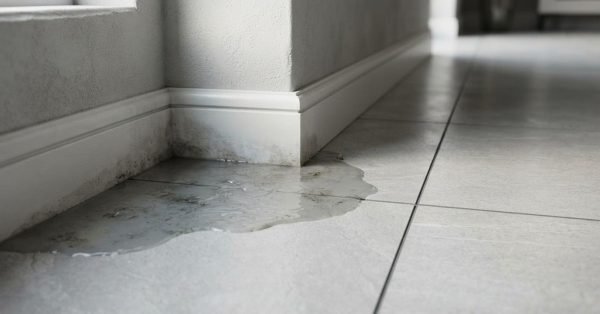
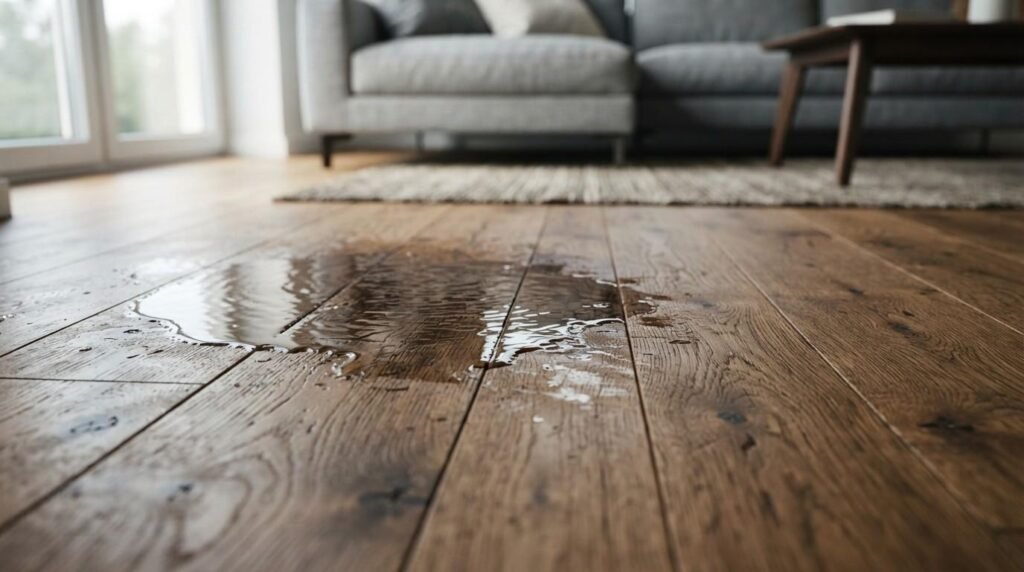
Some signs are obvious. Standing water, a ceiling stain spreading by the hour, a musty smell that wasn’t there last week. Others are quiet enough that people miss them until the damage is structural.
Warped or cupping wood flooring, paint that’s bubbling, drywall that feels soft when you press it. These all point to moisture that’s been sitting for a while.
A musty odor is often the earliest signal, and it usually means moisture is already inside a wall cavity or under flooring. The Centers for Disease Control and Prevention notes that visible mold growth can begin within 24 to 48 hours of water exposure, which is why odor and discoloration deserve fast attention rather than a wait-and-see approach.
Higher utility bills with no clear explanation sometimes trace back to a slow leak inside a wall or under a foundation slab. I’ve seen homeowners chase a mystery water bill for months before finding the source.
Categories and Classes of Water Damage
Restoration professionals classify water damage by source and by severity, and both numbers change how a job gets handled.
Category describes contamination level. Category 1 is clean water from a supply line. Category 2 is greywater with some contamination, like a washing machine overflow. Category 3 is blackwater, meaning sewage or floodwater, and it carries a real health risk.
Category 3 water is a biohazard that requires a grossly contaminated classification under industry restoration standards, and it demands full personal protective equipment and different disposal protocols for anything it touches.
Class describes how much water is involved and how much material absorbed it, running from Class 1 (minimal absorption) to Class 4 (deeply saturated materials like hardwood or concrete). A Class 4 loss dries much slower than a Class 1 loss, sometimes taking twice as long.
Knowing your category and class tells you roughly what to expect for cost and timeline before a technician even shows up.
The Water Damage Restoration Process Step by Step
Every legitimate restoration job follows the same skeleton, even though details shift by property and damage type.
Inspection and assessment come first. A technician walks the property with moisture meters and thermal imaging to map exactly where water traveled, not just where it’s visible.
Water extraction follows immediately, using pumps and industrial vacuums to remove standing water fast. Speed here matters more than almost anything else in the whole process.
Drying and dehumidification come next and take the longest. Industrial air movers and dehumidifiers pull moisture out of materials that look dry but aren’t.
Cleaning and sanitizing treat every affected surface to remove contaminants and prevent odor and mold growth.
Repairs and reconstruction close out the job, replacing drywall, flooring, or trim that couldn’t be saved. This is where a property actually looks like itself again.
Emergency Response and Water Extraction Timeline
Response speed determines almost everything else about how a water damage job turns out. A crew that arrives within an hour saves materials that a crew arriving the next day cannot.
Most reputable restoration companies target arrival within 60 to 90 minutes of an emergency call, especially for active flooding or burst pipes. That window exists because every hour water sits, it spreads further and soaks deeper.
Extraction itself usually takes a few hours for a typical residential room, depending on how much water is standing and how it’s distributed. A flooded basement takes longer than a single overflowed bathroom.
Once extraction wraps, drying equipment goes in immediately. There’s no gap between “water’s gone” and “drying starts,” because that gap is exactly when mold gets its foothold.
Structural Drying and Dehumidification Explained
Drying is the slowest and most misunderstood part of restoration. It’s also the part homeowners get most impatient about, because the house looks fine but equipment is still running.
A typical residential drying cycle runs three to five days, monitored daily with moisture meters to confirm materials are actually reaching a safe moisture content, not just looking dry on the surface.
Air movers create airflow across wet surfaces to speed evaporation, while dehumidifiers pull that moisture out of the air so it doesn’t just resettle. Both run together, around the clock, for the full drying window.
Removing equipment too early is one of the most common restoration mistakes. Materials that feel dry to the touch can still hold enough moisture deep inside to grow mold weeks later.
Cleaning, Sanitization, and Mold Prevention
Once materials are dry, everything affected gets cleaned and treated, not just wiped down. Category 2 and 3 water in particular need antimicrobial treatment to neutralize contaminants.
Porous materials that absorbed contaminated water – certain carpet padding, some drywall, insulation – often can’t be sanitized enough to save and get removed instead. That’s a judgment call a good technician makes early, not after mold shows up.
Mold prevention isn’t a separate add-on step. It’s built into the drying and sanitizing process itself, because mold needs moisture and organic material to grow, and restoration removes both.
Odor treatment usually happens alongside sanitizing, using ozone or hydroxyl treatments for stubborn cases where standard cleaning doesn’t fully clear the smell.
Water Damage Repair Cost Breakdown
Cost depends heavily on category, class, square footage, and how much needs to be replaced versus dried and saved.
A typical residential water damage restoration job runs $1,300 to $5,600 for moderate damage, according to Angi’s home services cost data, though severe flooding or sewage backups push well beyond that range.
Here’s a general cost breakdown by scope:
| Damage Level | Typical Cost Range | What’s Included |
| Minor (Class 1) | 150–1,000 | Extraction, drying only |
| Moderate (Class 2-3) | 1,300–5,600 | Extraction, drying, some material replacement |
| Severe (Class 4, Category 3) | 7,000–15,000+ | Full extraction, drying, demo, reconstruction |
Factors that push cost up include contaminated water requiring hazmat protocols, structural materials like hardwood or concrete that dry slowly, and how much drywall or flooring needs full replacement instead of drying in place.
Insurance often covers sudden, accidental water damage, like a burst pipe, while it typically excludes gradual leaks or flooding without separate flood coverage. That distinction changes your out-of-pocket cost significantly.
Residential vs Commercial Water Damage Restoration
Residential and commercial restoration share the same core process, but the scale, urgency, and stakes differ a lot.
Commercial properties usually involve more square footage, more complex HVAC and plumbing systems, and a business that’s losing revenue for every day it stays closed. That urgency changes scheduling and crew size.
Commercial jobs also carry compliance requirements that residential jobs don’t. Health codes, occupancy regulations, and sometimes insurance stipulations about who can perform the work and how it gets documented.
Facility managers usually need detailed documentation and progress reporting throughout the job, since they’re often accountable to ownership groups, tenants, or regulatory bodies in a way a homeowner isn’t.
We staff commercial jobs differently than residential ones specifically because of that documentation and scheduling pressure.
Insurance Claims and Working With Adjusters
Insurance is where a lot of property owners get stuck, mostly because they don’t know what to document or when to call their provider.
Photograph and video everything before any cleanup starts. Adjusters rely on this evidence to determine coverage, and cleanup that happens too fast can complicate a claim rather than help it.
A restoration company experienced with insurance claims documents moisture readings, damage extent, and the work performed at each stage, which gives adjusters exactly what they need without back-and-forth delays.
Most policies cover sudden and accidental damage but exclude damage from neglect or gradual deterioration. Knowing which category your claim falls into before the adjuster visits helps set realistic expectations.
Choosing a Water Damage Restoration Company
Not every restoration company operates the same way, and the difference shows up fast once water’s already on your floor.
Look for 24/7 emergency availability, since water damage doesn’t wait for business hours and neither should your restoration crew. Response time is often the single biggest factor in final cost and outcome.
Certification matters too. Technicians trained to IICRC standards follow documented, industry-recognized procedures rather than guesswork, which matters when insurance is reviewing the work performed.
Transparent communication throughout the job, clear timelines, itemized costs, and daily updates tell you a lot about how a company operates before you’re ever in an emergency with them.
At Mr. Damage Rescue, we built our process around fast response, clear communication, and documentation that holds up with insurance from day one.
Conclusion
Water damage restoration moves through inspection, extraction, drying, sanitizing, and repair, and understanding that sequence helps property owners make faster, better decisions under pressure.
Cost and timeline both depend on category, class, and how quickly professionals respond once water starts spreading through a structure.
We’re ready to respond fast, document everything for your insurance, and get your property dry and restored. Call Mr. Damage Rescue when water damage hits and let’s get started.
Frequently Asked Questions
How long does water damage restoration take?
Most residential water damage restoration takes three to five days for standard drying, though severe or contaminated damage can extend to two weeks or more.
How much does water damage repair cost?
Moderate residential water damage typically costs $1,300 to $5,600, while minor damage runs lower and severe or contaminated damage runs significantly higher.
Will homeowners insurance cover water damage?
Insurance usually covers sudden, accidental water damage like burst pipes, but it typically excludes gradual leaks or flooding without separate flood insurance coverage.
Can I dry out water damage myself?
Surface water can be removed with fans and dehumidifiers, but hidden moisture inside walls and subfloors usually needs professional moisture meters to detect and fully dry.
How fast does mold grow after water damage?
Mold growth can begin within 24 to 48 hours of water exposure, which is why fast extraction and drying matter so much in the first two days.
What’s the difference between water mitigation and water damage restoration?
Water mitigation stops the damage from getting worse through extraction and drying, while restoration includes the full process through cleaning, sanitizing, and repairs.
Do I need a professional for a small water leak?
Small, caught-early leaks sometimes get handled with a wet vac and fans, but any leak affecting drywall, subflooring, or running longer than 24 hours needs a professional moisture check.