Structural water damage means water has moved past surfaces and into the framing, subfloors, insulation, or foundation of a building. Left untreated for 48 to 72 hours, that moisture starts breaking down wood fibers and inviting mold growth. I have walked into homes where a small ceiling stain turned out to be a soaked truss system underneath.
This is not a cosmetic problem. A weakened subfloor or rotted stud affects the safety of everyone inside the building, and it gets more expensive every day it sits.
Here I walk through what structural water damage actually is and why it spreads, the full restoration and repair process, how residential and commercial jobs differ in timeline and cost, the prevention steps that stop this from happening again, and the signs that tell you it is time to call a professional.
What Structural Water Damage Really Means
Structural water damage is water intrusion that reaches a building’s load-bearing or supportive elements framing, subfloor, joists, or foundation rather than staying on a surface finish. That distinction matters because surface damage dries out. Structural damage rots, warps, and weakens over time.
I think about it in two layers: the type of water involved, and the class of damage it causes. Both determine how the restoration team approaches the job.
Categories of Water Involved
Restoration professionals classify water by contamination level. Clean water comes from a supply line break and carries the lowest risk. Gray water includes appliance discharge or sump pump backup and carries some contamination. Black water, sewage backup, or flood water is a category that is a serious health hazard that needs different handling entirely.
The category dictates what gets dried versus removed. Clean water on drywall might be salvageable. Black water on drywall is not.
Classes of Structural Damage Severity
The Institute of Inspection Cleaning and Restoration Certification defines four classes of water damage based on how much material has absorbed moisture and how hard it is to dry. Class 1 affects minimal material with low absorption. Class 4 involves deeply saturated materials like hardwood, plaster, or concrete that require specialized drying methods and extended timelines.
I use this classification constantly when scoping a job, because it tells me the equipment and time a property actually needs.
How Water Compromises a Building’s Structure Over Time
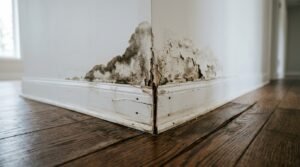
Wood framing absorbs water like a sponge, and that absorption sets off a chain reaction. Fibers swell, then weaken, then start to break down as fungi colonize the moisture. A stud that stays wet for more than a week loses meaningful structural integrity even if it looks fine from the outside.
The process is slow at first and then accelerates. That is the trap. Homeowners see a small stain and assume it is minor, while the framing behind the wall is already compromised.
Materials Most Vulnerable to Water
Untreated wood framing, particleboard subflooring, and drywall are the most vulnerable structural materials in a typical home. Particleboard in particular swells and crumbles fast, sometimes within 24 hours of sustained exposure.
Concrete and masonry hold up longer but are not immune. Water intrusion into concrete slabs leads to spalling, cracking, and rebar corrosion over months and years.
Warning Signs Structural Damage Is Progressing
Sagging floors, doors and windows that stick or no longer close flush, and visible cracks in walls or foundations are the clearest signs that structural damage has moved past the surface. A musty smell that will not go away, even after visible water is gone, usually means moisture is trapped somewhere inside a wall cavity.
I tell property owners to trust their nose and their feet before they trust their eyes. If a floor feels soft or springy underfoot, that is a structural signal, not a cosmetic one.
Common Causes of Structural Water Damage
Structural water damage almost always starts as a smaller, contained problem that goes unnoticed or unaddressed. Residential and commercial properties tend to face different root causes, though the outcome compromised framing and materials looks similar in both.
Residential Causes
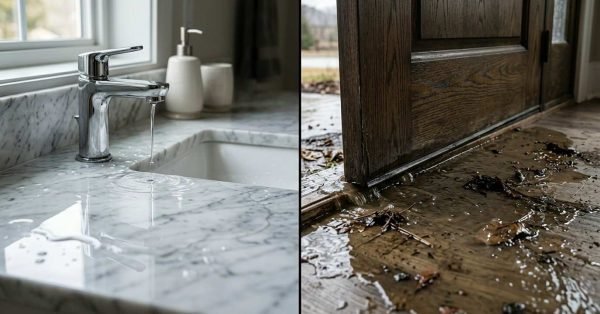
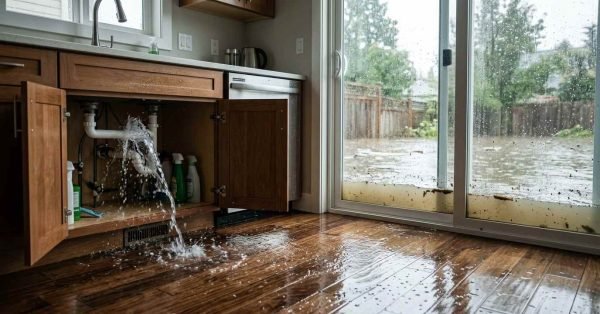
Burst pipes, failed water heaters, roof leaks, and appliance malfunctions cause most residential structural water damage I see. Frozen pipes during winter storms are a recurring pattern, since a single burst pipe can release hundreds of gallons before anyone notices.
Slow leaks under sinks or around window frames are sneakier. They do not flood a room, but they saturate a small structural area for months at a time.
Commercial Causes
Commercial properties face structural water damage from HVAC condensation lines, sprinkler system failures, flat roof drainage issues, and plumbing stack failures in multi-story buildings. Flat commercial roofs pool water far more than residential pitched roofs do, which makes roof membrane failure a leading cause of commercial structural intrusion.
Business interruption raises the stakes here. A leak that goes unnoticed over a weekend can saturate an entire floor’s subfloor before Monday.
The Structural Water Damage Restoration Process, Step by Step
Restoration follows a defined sequence, and skipping a step almost always causes problems later usually mold, usually months after the visible repair looks finished. I walk every property through the same four-stage process regardless of size.
Emergency Assessment and Inspection
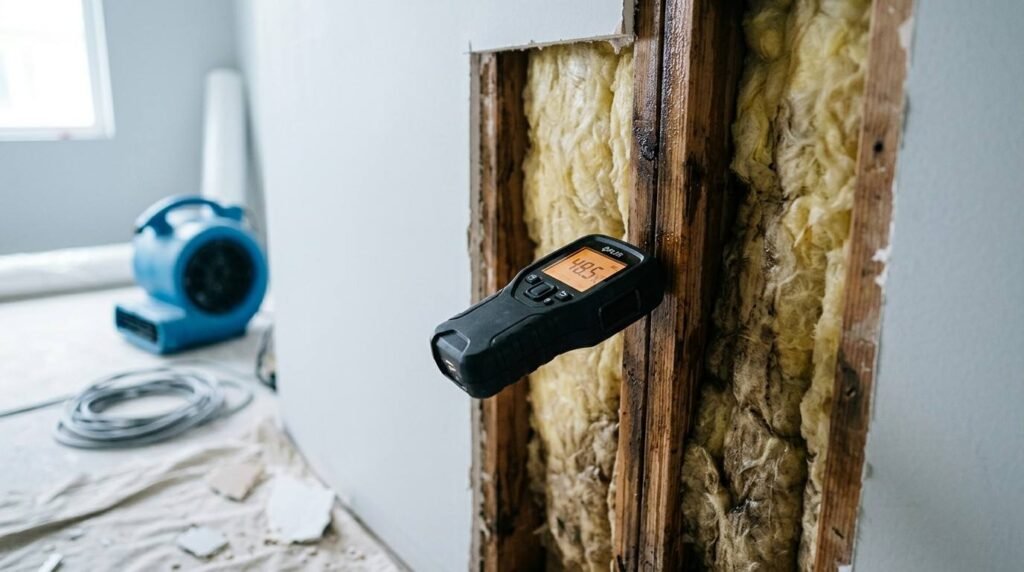
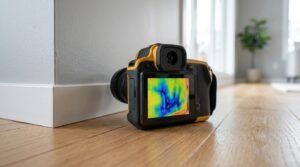
The first step is identifying the water source, stopping it, and assessing which structural elements are affected using moisture meters and thermal imaging. This assessment determines the water category, the damage class, and the full scope of the restoration plan before any equipment gets deployed.
Skipping this step means guessing. And guessing on a structural job means missing hidden moisture that surfaces as mold three months later.
Water Extraction and Moisture Detection
Standing water gets removed first with pumps and industrial wet vacuums, followed by moisture mapping to find water that has traveled into wall cavities or under flooring. Moisture meters read percentages in real materials, not visible wetness, which is why this step matters even after a room looks dry.
I have found saturated subfloor three rooms away from where a pipe actually burst. Water travels along the path of least resistance, not in a straight line.
Structural Drying and Dehumidification
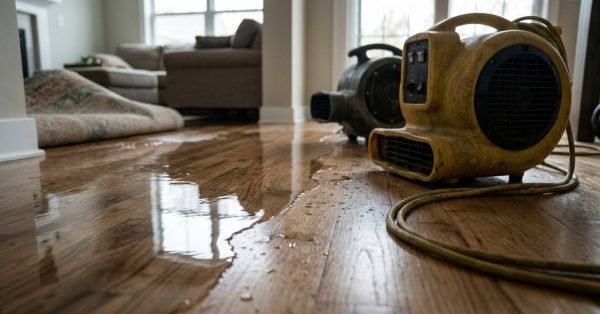
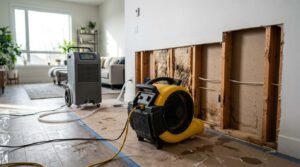
Industrial air movers and commercial dehumidifiers work together to pull moisture out of framing, subfloors, and wall cavities over several days to weeks depending on the damage class. This stage is monitored daily with moisture readings until materials return to a normal, dry baseline, not just until they feel dry to the touch.
Rushing this stage is the single biggest mistake in restoration. Materials that look dry on day two can still be wet at the core on day five.
Cleaning, Sanitization, and Mold Prevention
Once materials reach target dryness, the team cleans and sanitizes affected surfaces with antimicrobial treatments to prevent mold colonization. Mold can begin growing within 24 to 48 hours of sustained moisture exposure, according to the Environmental Protection Agency.
That timeline is why the drying stage cannot be delayed or half-finished. Every day of delay compounds the mold risk on the back end.
Structural Repairs After Water Damage
Once the property is fully dry and sanitized, physical repairs begin. This is where restoration shifts from mitigation into reconstruction, and it is often the stage property owners are most focused on since it is visibly tangible progress.
Repairing Framing, Subfloors, and Drywall
Damaged studs, joists, and subflooring that failed to meet dry standards get replaced rather than treated, since compromised structural wood does not regain its original strength. Drywall below the water line typically gets cut out and replaced, while drywall above it can sometimes be dried and saved.
I always explain this distinction to homeowners early, because it changes both the repair timeline and the cost.
Rebuilding vs. Restoring Existing Materials
A material gets restored when drying and cleaning fully return it to a safe, functional condition. It gets rebuilt when moisture has permanently compromised its structural integrity swelling, warping, or fungal decay that treatment cannot reverse.
The decision comes down to test readings, not appearance. A subfloor that looks fine can still fail a moisture content test and need replacement.
Residential vs. Commercial Structural Restoration

Residential and commercial water damage restoration follow the same core process, but scope, timeline, and priorities diverge quickly once the job starts. I scope these projects differently from the first phone call.
Scope and Timeline Differences
Residential jobs typically affect a single structure with one owner making decisions, while commercial jobs often involve multiple stakeholders, larger square footage, and coordination with property management or insurance adjusters. Commercial structural drying frequently takes longer simply because of the volume of material involved; a warehouse subfloor takes considerably more time to dry than a single bedroom.
Business Continuity Considerations
Commercial restoration has to account for keeping part of a business operational during repairs, phased scheduling around business hours, and coordination with employees or tenants. Residential restoration focuses more on making a home livable and safe for occupants as quickly as possible.
How Long Structural Water Damage Restoration Takes
A straightforward Class 1 residential job with early intervention typically takes 3 to 5 days from extraction through drying. Class 3 or 4 damage involving saturated framing, subflooring, or concrete extends that timeline to two weeks or more before repairs even begin.
Commercial jobs vary widely based on square footage, but a mid-size commercial space with structural involvement commonly runs three to six weeks total, including reconstruction. Delayed response time is the single biggest factor that extends any timeline, since untreated moisture spreads further the longer it sits.
What Structural Water Damage Restoration Costs
Cost depends heavily on the water category, damage class, and how much structural material needs replacement versus drying. A contained Class 1 residential job often lands in the low thousands, while a Class 4 job with subfloor and framing replacement pushes into the tens of thousands.
Factors That Influence Cost
Square footage affected, water contamination category, the number of structural elements requiring replacement, and how long the water sat before mitigation started all drive final cost. Black water jobs cost more across the board because contaminated materials frequently must be removed rather than treated.
Insurance and Documentation Considerations
Most homeowner and commercial property policies cover sudden water damage from burst pipes or appliance failures, though gradual leaks and flood damage often fall under separate coverage or exclusions. Thorough documentation, photos, moisture readings, and a detailed scope of work make the insurance claims process considerably smoother.
I always recommend getting a written, itemized restoration estimate before repairs begin. It protects the property owner during the claims process.
Preventing Structural Water Damage Before It Starts
Prevention costs a fraction of restoration, and most structural water damage traces back to a maintenance gap that existed for months before failure. A short list of habits catches most problems early.
Routine Maintenance Checks
Inspecting roof flashing, gutters, supply line connections, and appliance hoses twice a year catches the small failures before they become structural emergencies. Sump pumps and sewer backup valves deserve the same seasonal attention, particularly before storm season.
Early Detection Tools and Systems
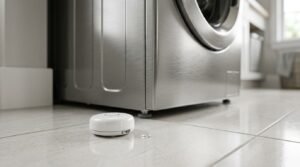
Water leak sensors placed near water heaters, washing machines, and under sinks alert property owners the moment moisture appears, often days before visible damage shows up. Smart shutoff valves take this a step further by cutting water supply automatically when a sensor detects an active leak.
These systems cost far less than a single structural repair job, and they catch problems while they are still cosmetic.
When to Call a Professional Restoration Team
Any water intrusion that reaches framing, subflooring, or insulation needs a professional restoration assessment, even when the visible damage looks minor. DIY drying with fans and a dehumidifier works for small surface spills; it does not reach saturated structural cavities the way commercial equipment does.
A musty odor that persists after cleanup, floors that feel soft, or any water event involving gray or black water are immediate signals to call a professional team like ours at Mr. Damage Rescue. Waiting to “see if it dries out” is the most common decision I see property owners regret.
Health and Safety Risks of Untreated Structural Water Damage
Untreated structural water damage creates two compounding risks: physical structural failure and airborne health hazards. Weakened framing can eventually lead to sagging or collapse in severe, prolonged cases, particularly in ceilings and floor systems.
Mold exposure from untreated moisture is linked to respiratory irritation, allergic reactions, and worsened asthma symptoms, according to the Centers for Disease Control and Prevention. Occupants with compromised immune systems or existing respiratory conditions face elevated risk from prolonged exposure in an affected building.
Conclusion
Structural water damage moves fast and quietly, turning a small leak into compromised framing within days. Understanding the categories, classes, and restoration stages helps property owners make faster, better decisions when it happens.
Prevention and early detection stop most structural damage before it starts, but any intrusion reaching framing or subflooring needs professional assessment. We at Mr. Damage Rescue bring the equipment, expertise, and clear communication needed to restore your property safely. Reach out the moment you suspect structural water damage.
Frequently Asked Questions
How do I know if water damage has reached the structure of my home?
Soft or sagging floors, sticking doors and windows, visible wall cracks, and a persistent musty smell all indicate water has reached structural materials. A moisture meter reading from a professional confirms it definitively.
Can structural water damage be repaired without replacing materials?
Some structural water damage is repaired through thorough drying alone if caught early, and moisture readings return to normal. Materials that have swollen, warped, or developed fungal decay need replacement instead.
How long does structural drying take?
Structural drying typically takes 3 to 5 days for minor damage and two weeks or more for severely saturated materials like concrete or dense hardwood. Daily moisture monitoring determines when drying is actually complete.
Is structural water damage covered by insurance?
Most policies cover sudden structural water damage from burst pipes or appliance failures, though gradual leaks and flooding often require separate coverage. Documentation from a professional restoration team strengthens any claim.
What is the difference between residential and commercial structural restoration?
Commercial restoration typically involves larger square footage, multiple stakeholders, and scheduling around business operations, while residential restoration focuses on returning a single home to a safe living condition. The core drying and repair process is the same for both.
Can I stay in my home during structural water damage repairs?
Staying home is possible during minor, localized repairs, but extensive structural work involving framing or subfloor replacement often requires temporary relocation for safety. A restoration professional can assess your specific situation.
What causes mold after structural water damage?
Mold develops when moisture remains trapped in framing, drywall, or subflooring for 24 to 48 hours or longer without proper drying. Incomplete or rushed drying is the most common cause of post-restoration mold growth.
How much does structural water damage repair typically cost?
Costs range from a few thousand dollars for contained, minor damage to tens of thousands for extensive structural replacement. Water contamination category, square footage affected, and response time all influence the final cost.