Water usually finds its way into appliances long before anyone notices the damage. I’ve walked into plenty of homes where a dishwasher or washing machine looked fine from the outside but had already taken on water at the base, behind panels, or inside the motor housing.
Flooding and leaks don’t just soak floors and walls. They compromise the machines plugged into your walls, and that creates a real safety question, not just a repair question.
I’ll walk you through what actually happens to appliances during water exposure, which ones typically survive with repair, when replacement is the safer call, and how professional assessment protects your home and your budget.
What Happens to Appliances When Water Damage Occurs
Water doesn’t damage every appliance the same way. The extent of harm depends on how deep the water rose, how long it sat, and what type of components got exposed. A few inches of standing water reaching the base of a refrigerator behaves very differently than a full flood submerging a washing machine’s control panel.
Electrical components take the worst hit. Circuit boards, wiring, and control panels corrode fast once moisture gets inside, and that corrosion often keeps spreading for days after the water is gone.
Mechanical parts fare somewhat better. Motors, pumps, and mechanical assemblies can sometimes be dried out, cleaned, and returned to service, especially in appliances built with sealed components.
Electrical vs. Mechanical Component Damage
Electrical damage tends to be the deciding factor in most repair-versus-replace decisions. Water conducts electricity, and once it reaches a circuit board or wiring harness, the corrosion process starts immediately and rarely stops on its own.
Mechanical damage behaves differently. A motor or pump that got wet but not submerged for long can often be dried, cleaned, and tested safely.
The National Institute of Standards and Technology notes that water intrusion into electrical systems significantly increases the risk of short circuits and equipment failure, even after the visible moisture is gone.
That distinction between electrical and mechanical damage is exactly why appliance-by-appliance assessment matters more than a blanket rule.
Which Appliances Can Typically Be Repaired After Water Exposure
Some appliances hold up better than others after water exposure, mostly because of where their critical components sit. Appliances with elevated electrical parts and sealed motor housings tend to have better repair odds than those with low-mounted controls.
Refrigerators and freezers often survive shallow flooding reasonably well, since their compressors and electrical components typically sit higher off the ground. Water reaching only the base rarely compromises the cooling system itself.
Washing machines present a mixed picture. Front-load models with lower control panels face more risk than top-load units, where the electronics sit above the water line in most flooding scenarios.
Ovens and stoves generally fare better too, since their electronics are usually positioned at height, away from floor-level water.
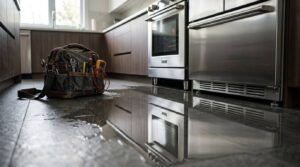
Signs a Water-Damaged Appliance Is Salvageable
A few consistent signs point toward a repairable appliance. No visible corrosion on exposed metal, no lingering odor after drying, and a motor that runs smoothly without unusual noise all suggest the internal damage stayed limited.
I also check whether the appliance was unplugged quickly. Appliances shut off before prolonged submersion tend to have a much better repair outlook than ones left running in standing water.
Testing under controlled conditions matters here too. A qualified technician checks resistance levels and insulation integrity before ever powering an appliance back on, because visible dryness doesn’t guarantee the internal wiring is safe.
When Replacement Makes More Sense Than Repair
Not every water-damaged appliance is worth saving, and pushing repair on the wrong unit creates ongoing safety risk. Full submersion, prolonged water exposure, and any sign of electrical component contact all point toward replacement rather than repair.
Dishwashers rank among the hardest appliances to save after water damage, mainly because their electronics sit close to the floor and get exposed almost every time flooding occurs.
Washing machines with flooded control boards fall into the same category. Once water reaches the main circuit board, the corrosion risk usually outweighs any potential repair savings.
Cost matters too. Repair estimates that approach 50% of a replacement unit’s price rarely make financial sense once labor, parts, and testing time get factored in.
Safety Risks of Repairing Severely Damaged Appliances
Repairing an appliance that took on serious water damage carries real safety risks, not just a chance of the fix not working. Corroded wiring can cause short circuits, and short circuits can spark house fires or shock hazards.
Never plug in a water-damaged appliance to test it yourself. That single action has caused documented electrical fires and shock injuries in homes across the country.
The Electrical Safety Foundation International recommends professional inspection of any electrical appliance exposed to flooding before returning it to service, citing the risk of hidden internal damage that isn’t visible from the outside.
How Professionals Assess and Restore Water-Damaged Appliances
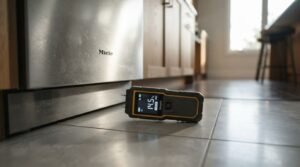
Professional assessment goes well beyond a visual check. Restoration technicians test moisture levels inside appliance housings, check electrical resistance, and inspect components that aren’t visible without disassembly.
I rely on moisture meters to measure water content inside walls, floors, and appliance housings, since surface dryness doesn’t always mean the internal components are safe.
Technicians also document the water exposure timeline, because how long an appliance sat in water matters just as much as how deep the water got. That timeline often determines whether a repair attempt is even worth pursuing.
For appliances tied into a home’s plumbing or electrical systems, a broader look at structural drying work usually happens alongside the appliance assessment, since the surrounding walls and flooring took on moisture too.
Working With a Restoration Company vs. DIY Appliance Checks
DIY inspection has real limits here. Without resistance testing equipment and training in electrical safety protocols, a homeowner can’t reliably tell whether an appliance that looks fine is actually safe to plug back in.
Restoration professionals also coordinate appliance assessment with the rest of the property recovery process. That matters because appliances rarely get damaged in isolation. If water reached your dishwasher, it likely reached your cabinets, flooring, and subfloor too.
We handle that full picture at Mr. Damage Rescue, checking appliances alongside the structural and moisture assessment so nothing gets missed. That coordinated approach catches problems a standalone appliance check would overlook entirely.
Conclusion
Water-damaged appliances follow a clear pattern. Electrical exposure and prolonged submersion usually mean replacement, while shallow, brief exposure to appliances with elevated components often allows for safe repair.
Getting that call wrong risks house fires, shock injuries, and wasted repair spending on appliances that were never salvageable to begin with.
We help homeowners make that call with confidence. Reach out to Mr. Damage Rescue for a professional assessment of your water-damaged appliances and the rest of your property.
Frequently Asked Questions
Can a washing machine be repaired after flooding?
A washing machine can often be repaired after shallow flooding if the control board stayed above the water line. Full submersion or wiring contact usually means replacement is safer.
How do I know if my refrigerator is safe after water damage?
A refrigerator is usually safe after shallow water exposure since its compressor and electronics sit higher off the ground. Deep flooding still requires professional testing before use.
Is it safe to plug in a water-damaged appliance to test it?
No, plugging in a water-damaged appliance without professional testing risks electrical shock or fire. Corroded wiring isn’t always visible from the outside.
How much water damage does it take to ruin an appliance?
Full submersion or water reaching electrical components typically causes irreversible damage. Shallow exposure to appliances with elevated parts often allows for repair.
Should I repair or replace a water-damaged dishwasher?
Most water-damaged dishwashers need replacement since their electronics sit close to the floor. Repair only makes sense with minimal, brief water exposure and no board contact.
How long does professional appliance assessment take?
Professional appliance assessment typically takes one to two hours per unit, depending on how many appliances were affected. Testing includes moisture readings and electrical resistance checks.
Does homeowners insurance cover water-damaged appliances?
Many homeowners insurance policies cover water-damaged appliances when the damage results from a sudden event like a burst pipe. Coverage varies, so checking your policy details matters.