Water damage restoration follows a structured process that starts with emergency water extraction and ends with full structural repairs. Most residential water damage jobs move through five to seven distinct stages over three to ten days, depending on the size of the affected area and the extent of saturation. I walk you through exactly what happens at each stage below.
A burst pipe or flooded basement rarely waits for a convenient time, and every hour of standing water raises the risk of structural damage and mold growth. Property owners who understand the process ahead of time make faster, better decisions when water damage actually happens. This guide breaks that stress into a clear sequence you can follow.
I cover how restoration teams handle the first emergency response and assessment, the extraction and drying stages that remove water and moisture, the cleaning and mold prevention work that follows, how repairs and reconstruction differ between homes and businesses, and what the overall timeline, documentation, and cost picture typically looks like.
What Is Water Damage Restoration and Why It Matters
Water damage restoration is a structured process that removes excess water, dries affected materials, and repairs a property to its pre-loss condition. It combines extraction equipment, drying science, and construction repair work into one coordinated response.
I’ve walked into homes three days after a leak where the homeowner assumed a few fans would dry things out. They don’t. Wet drywall, insulation, and subfloor hold moisture long after the surface feels dry, and that trapped moisture is exactly what invites mold and structural rot.
Untreated water damage doesn’t stay contained. It travels through wall cavities, wicks up baseboards, and settles into subflooring where it’s invisible until the damage is already extensive.
Root Causes of Residential and Commercial Water Damage
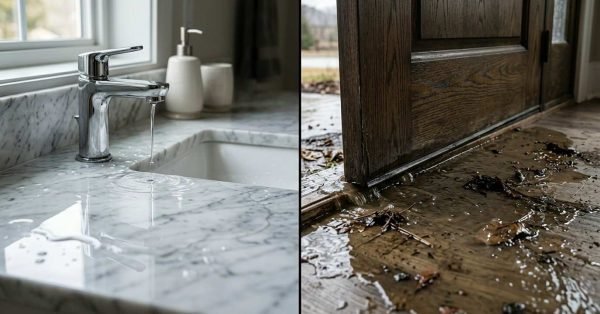
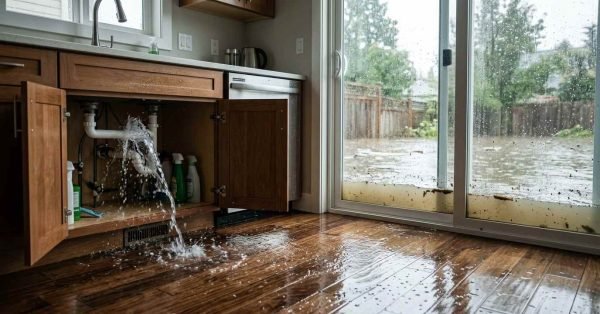
Burst pipes, appliance failures, roof leaks, and storm intrusion account for most residential claims. Commercial properties face those same risks plus additional exposure from HVAC condensation, sprinkler system malfunctions, and flat roof drainage failures.
Every source behaves differently. A burst supply line delivers clean water fast and hard, while a slow roof leak soaks materials gradually over weeks before anyone notices a stain.
The First 24 Hours: Emergency Response and Assessment
The first 24 hours determine how much of a property can be saved versus rebuilt. Fast water removal during this window is the single biggest factor in controlling total repair cost.
We treat the first call as the start of the clock, not the arrival time. Technicians document pre-existing conditions, categorize the water source, and begin extraction within the same visit whenever the property is accessible.
Restoration crews classify water damage into three categories based on contamination level. Category 1 is clean water from a supply line, Category 2 carries some contaminants like dishwasher discharge, and Category 3 is grossly contaminated water from sewage backup or floodwater.
How Restoration Teams Assess Water Damage Severity
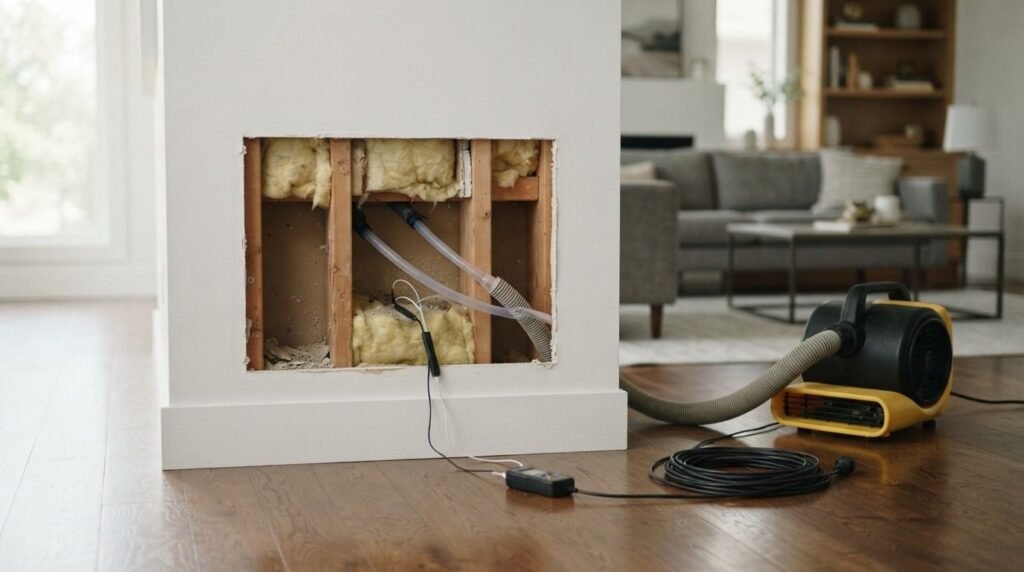
Technicians use moisture meters and thermal imaging cameras to map how far water has traveled beyond the visible wet area. This assessment shapes the entire drying plan, since materials that look dry on the surface often hold significant moisture underneath.
The severity classification also determines equipment count and drying duration. A single wet room needs far less equipment than water that has migrated through multiple floors or wall cavities.
Water Extraction and Removal Process
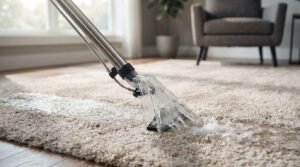
Water extraction removes standing and absorbed water using pumps and extraction tools before structural drying begins. Extraction has to happen before drying equipment goes in, because pulling bulk water out first cuts total drying time dramatically.
I’ve seen crews try to skip straight to fans and dehumidifiers on a flooded basement. It never works. Bulk water sitting in carpet padding or pooling in low spots overwhelms drying equipment and just extends the timeline.
Submersible pumps handle standing water over two inches deep, while truck-mounted extraction units pull water from carpet, padding, and hard flooring. Portable extractors handle tighter spaces like closets and stairwells where larger equipment can’t maneuver.
Equipment Used for Professional Water Extraction
Truck-mounted extractors generate stronger suction than portable units and move water faster on large-scale jobs. Portable extractors trade some suction power for maneuverability in tight hallways, bathrooms, and multi-story buildings.
Crews also use moisture detection tools throughout extraction, not just at the initial assessment. This confirms when a space has moved from “wet” to genuinely ready for the drying phase.
Structural Drying and Dehumidification
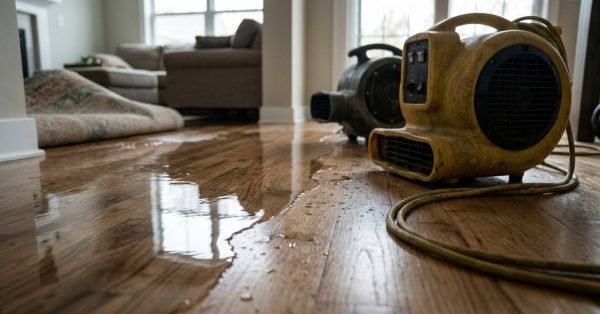
Structural drying uses air movers and dehumidifiers to remove residual moisture from walls, floors, and structural framing after extraction. Most residential drying cycles run three to five days, though heavily saturated materials or hidden moisture pockets extend that window.
We monitor moisture levels daily during this phase rather than guessing based on a set schedule. Drying is complete when moisture content readings in wood framing and drywall return to normal ranges, not when a fixed number of days has passed.
Air movers create airflow across wet surfaces to speed evaporation, while dehumidifiers pull that moisture out of the air so it doesn’t just resettle on nearby materials. Both pieces of equipment work together, and running one without the other slows the whole process down.
How Long Structural Drying Typically Takes
Drying time depends on material type, how much water was absorbed, and ambient humidity in the space. Hardwood floors and plaster walls hold moisture longer than drywall and typically need extended drying cycles.
Daily moisture readings guide the decision to pull equipment. Pulling equipment too early on a job that looks dry but tests wet leads to mold growth weeks later.
Cleaning, Sanitization, and Odor Control
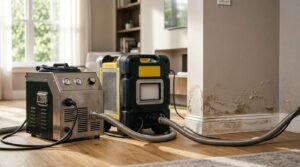
Cleaning and sanitization eliminate contaminants, bacteria, and odor-causing residue left behind after water intrusion. This step matters even after clean-water losses, since standing water picks up dirt and organic material from carpet padding and subflooring within hours.
Category 2 and Category 3 water losses require antimicrobial treatment on all affected surfaces before reconstruction begins. Skipping this step on contaminated water creates a health risk that surfaces long after the visible damage is repaired.
Sanitization Standards for Health and Safety
Restoration crews follow guidelines from the Institute of Inspection, Cleaning and Restoration Certification for antimicrobial application and contaminated material handling. The CDC recommends removing porous materials that have been wet for more than 48 hours, since they become difficult to fully sanitize.
Odor control uses hydroxyl generators or ozone treatment depending on the severity of the contamination and whether the space is occupied during treatment.
Mold Prevention and Mold Risk Management
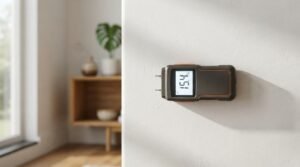
Mold prevention combines fast drying, antimicrobial treatment, and moisture monitoring to stop fungal growth before it starts. Mold spores are present in nearly every environment, and they only need moisture and organic material to begin colonizing within 24 to 48 hours.
This is why the speed of the first three stages matters so much. A property dried within 48 hours has a dramatically lower mold risk than one left wet for a week, regardless of how thorough the cleaning is afterward.
Signs Mold Growth Has Already Started
A musty odor, discoloration on drywall, or a fuzzy texture on porous materials all indicate active mold growth. Mold Prevention Center research shows moisture-related mold complaints rise sharply in the days following unresolved water intrusion, which is part of why drying timelines get monitored so closely.
Visible mold on a small surface area often signals larger hidden growth inside wall cavities or under flooring. Professional mold assessment identifies the full extent before cleanup begins.
Damaged Material Removal and Reconstruction Repairs
Damaged material removal takes out materials too saturated or contaminated to dry and salvage, clearing the way for reconstruction. Drywall, insulation, and carpet padding are common casualties, since they absorb water quickly and rarely dry back to a safe, stable condition.
We make removal decisions based on moisture testing, not visual guesswork. A wall that looks fine on the surface but tests wet six inches up still gets opened and assessed.
Reconstruction repairs restore removed materials and finish the property back to its pre-damage condition, including drywall, flooring, paint, and trim work. This final stage is where a restoration project actually starts looking like a finished space again.
What Gets Repaired vs. Replaced After Water Damage
Hard surfaces like tile and solid wood often get cleaned and dried rather than replaced, since they resist water absorption. Porous materials like drywall, carpet padding, and particleboard cabinetry almost always get replaced once they’ve been saturated for any meaningful length of time.
Structural framing gets replaced only when moisture readings show sustained saturation deep into the wood, since minor surface moisture in framing typically dries without compromising strength.
Residential vs. Commercial Restoration: Key Differences
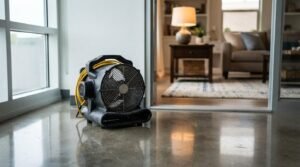
Residential restoration prioritizes livability and personal belongings, while commercial restoration prioritizes minimizing business downtime and protecting equipment or inventory. Both follow the same core process, but the sequencing and scale look very different.
A flooded home office and a flooded server room both need extraction and drying, but the commercial job usually runs on a compressed timeline because every closed day costs revenue. We often coordinate around business hours, working overnight or in phases so a business can stay partially operational.
Commercial properties also tend to involve larger square footage, multiple stakeholders, and more complex documentation for insurance and liability purposes.
Business Disruption and Downtime Considerations
Facility managers often need partial restoration completed in phases so parts of a building stay operational during the project. This phased approach adds coordination complexity but keeps revenue-generating areas open while restoration continues elsewhere.
Commercial contracts increasingly build restoration response times into lease agreements and insurance policies, which shapes how quickly crews need to mobilize.
Water Damage Restoration Timeline: What to Expect
A typical residential water damage restoration project runs three to ten days from initial extraction through final repairs, though severe or widespread damage extends that range. Commercial projects vary more widely based on square footage and business operating requirements.
Extraction usually finishes within the first day. Drying takes another three to five days, and cleaning, mold treatment, and reconstruction repairs fill out the remainder of the timeline depending on how much material needs replacing.
Factors That Extend or Shorten Restoration Time
Water category, square footage, material type, and how quickly the leak was discovered all shape total restoration time. A Category 1 leak caught within hours dries far faster than Category 3 flooding left standing for days.
Older homes with plaster walls and solid wood trim often take longer to dry and repair than newer construction with standard drywall and engineered flooring.
Insurance, Documentation, and Cost Considerations
Restoration companies document every stage of the process with photos, moisture readings, and detailed reports to support insurance claims. This documentation protects the property owner and gives the insurance adjuster the evidence needed to process a claim efficiently.
We photograph the damage before touching anything, then continue documenting throughout extraction, drying, and repairs. That paper trail is often what separates a smooth claim from a drawn-out dispute.
What Documentation Restoration Companies Provide
Detailed scope-of-work reports, daily moisture logs, and itemized material lists make up the core documentation package for most claims. Photos taken at each stage give a visual timeline that supports the written reports.
Property owners should request copies of all documentation directly, rather than relying solely on the insurance adjuster’s file. Having your own copy protects you if a dispute comes up later.
Conclusion
Water damage restoration moves through a clear sequence: emergency response, extraction, drying, cleaning, mold prevention, and repairs. Each stage protects the property from further structural and health risks while restoring it to a safe, livable condition.
Residential and commercial properties follow this same core process, though timelines and priorities shift based on occupancy and business needs. Understanding these stages helps property owners make faster, more confident decisions during a stressful event.
We handle every stage of this process for homeowners and businesses across the US. Contact Mr. Damage Rescue for fast, professional water damage restoration you can depend on.
Frequently Asked Questions
How long does water damage restoration take?
Most residential jobs take three to ten days from extraction through final repairs. Severe damage or large commercial properties extend that timeline based on square footage and material types involved.
Can water-damaged drywall be saved?
Drywall wet for less than 24 to 48 hours sometimes dries successfully with proper equipment. Drywall saturated longer or exposed to contaminated water almost always requires replacement.
What’s the difference between water mitigation and water restoration?
Mitigation refers to the emergency extraction and drying work that stops further damage. Restoration includes mitigation plus the full repair and reconstruction work that returns the property to pre-loss condition.
Does homeowners insurance cover water damage restoration?
Coverage depends on the source of the water and the specific policy terms. Sudden events like burst pipes are typically covered, while gradual leaks from neglected maintenance often are not.
How soon does mold grow after water damage?
Mold can begin growing within 24 to 48 hours in the right conditions. This is why fast extraction and drying are critical in the first days after water intrusion.
What equipment is used to dry a water-damaged property?
Air movers, dehumidifiers, and moisture meters make up the core equipment for structural drying. Larger jobs also use truck-mounted extraction units and thermal imaging cameras for assessment.
Do commercial properties restore differently than homes?
Commercial restoration follows the same core process but prioritizes minimizing business downtime and often requires phased work. Larger square footage and equipment or inventory protection also add complexity compared to residential jobs.
What should I do immediately after discovering water damage?
Shut off the water source if possible, then contact a professional restoration company right away. Avoid walking through standing water near electrical outlets or panels until it’s confirmed safe.